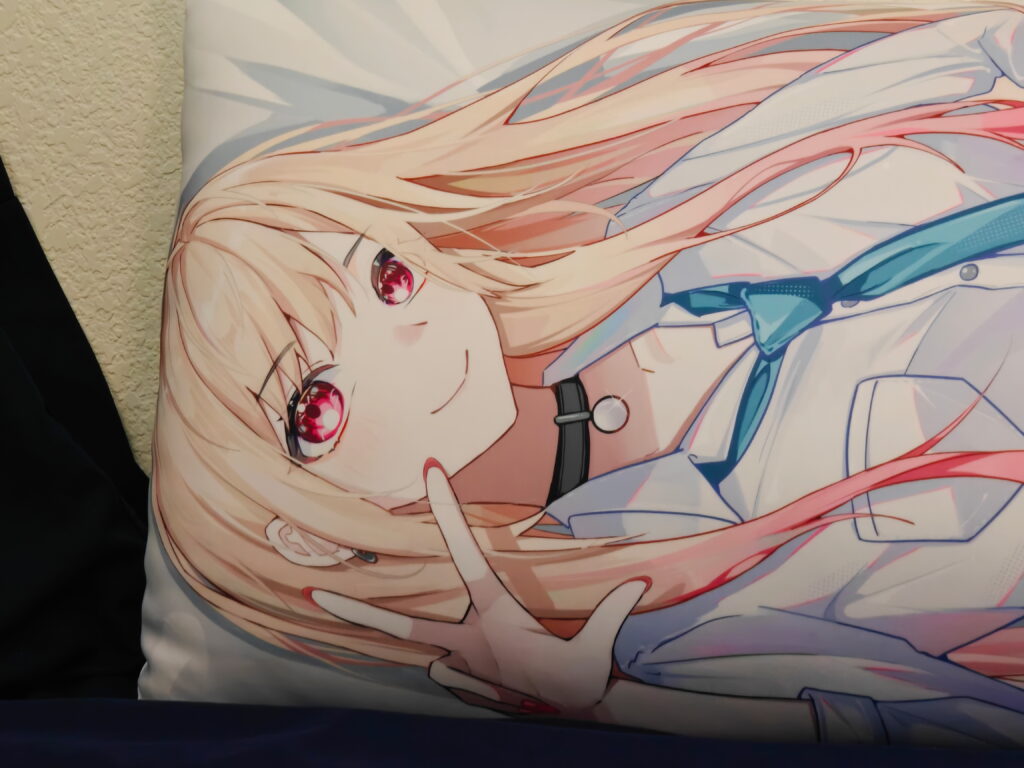
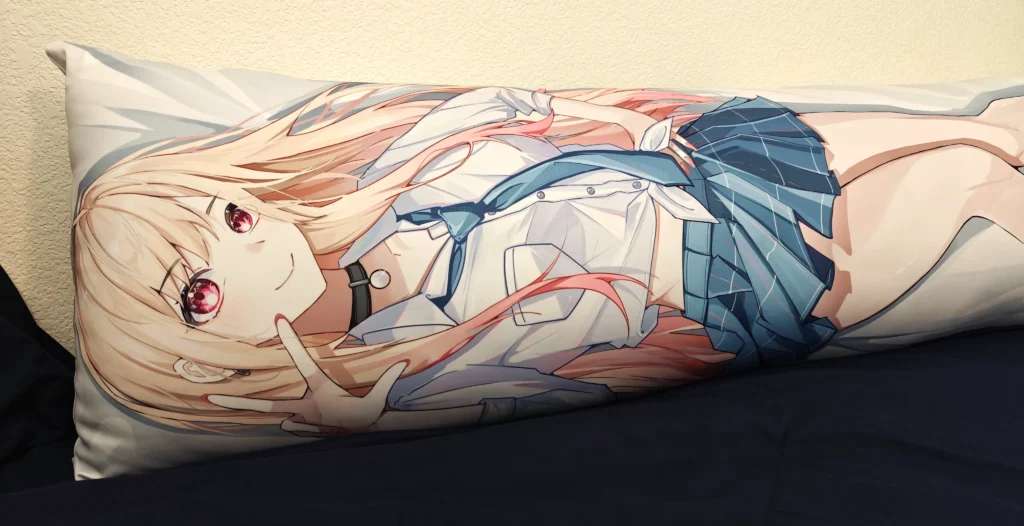
More options are always good, not just with dakimakura designs, but also with dakimakura sellers! Today, I’ll be discussing a relatively new dakimakura shop called DakiKoi. I’ll also take a look at one of their offerings, a design of Marin Kitagawa (from My Dress-Up Darling) created by the artist 姜饼人被吃掉啦 (or @jiangbingrenbe1 on X).
Disclaimer: I received two free dakimakura covers in exchange for writing this blog post. I received no other compensation, and I was not limited in any way by DakiKoi regarding what I can or can’t say about them.
Background on DakiKoi
Back in July of last year, I received a Discord DM from Hebe Wong (also known as SuperHebe), a member of the DakiKoi team. At that time, I hadn’t heard about DakiKoi before, so I searched them up on the /r/Dakimakuras subreddit as well as the corresponding Discord server. I found that some prominent (and loud) voices in the dakimakura community were upset with DakiKoi for reasons I’ll explain here. DakiKoi may not like me spending the first part of this blog post digging into their history, but I want to fully explain why I personally think they’re a legitimate party to purchase from, while acknowledging why others in the daki community may not feel that way.
DakiKoi itself is a legitimate operation. The artists drawing designs for their shop are doing so willingly, have full knowledge that DakiKoi is publishing their designs, and are being compensated for their work. As such, it’s an objective fact that DakiKoi designs and prints are not bootlegs.
However, DakiKoi uses a company called Casemaka for their printing. Casemaka used to be a blatant bootleg shop, selling hundreds of stolen designs directly to consumers. In early 2025, Casemaka rebranded themselves as a white-label business-to-business printing service, around the same time that DakiKoi launched.
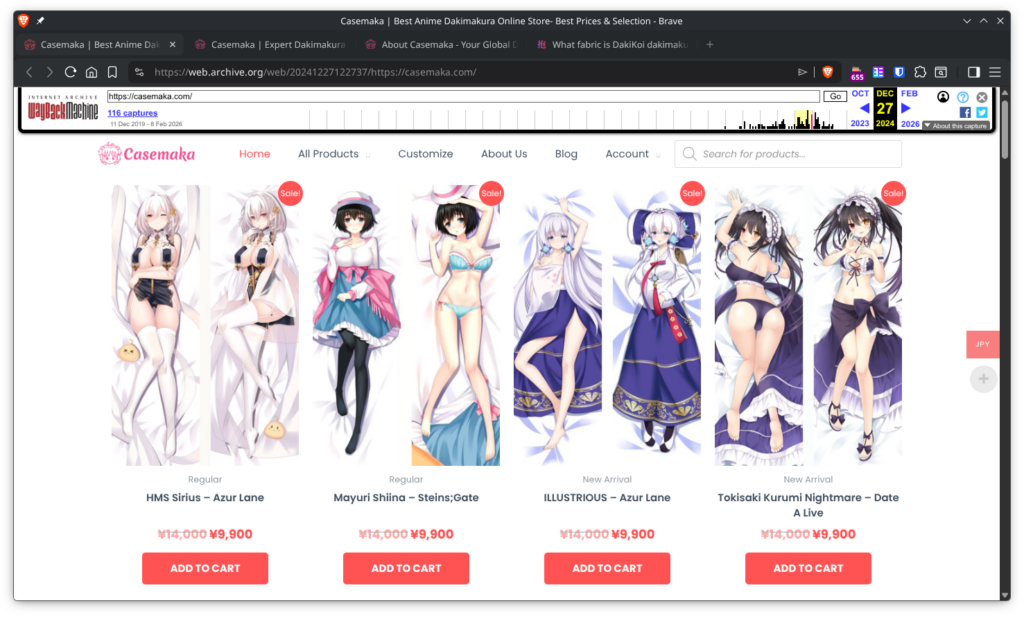
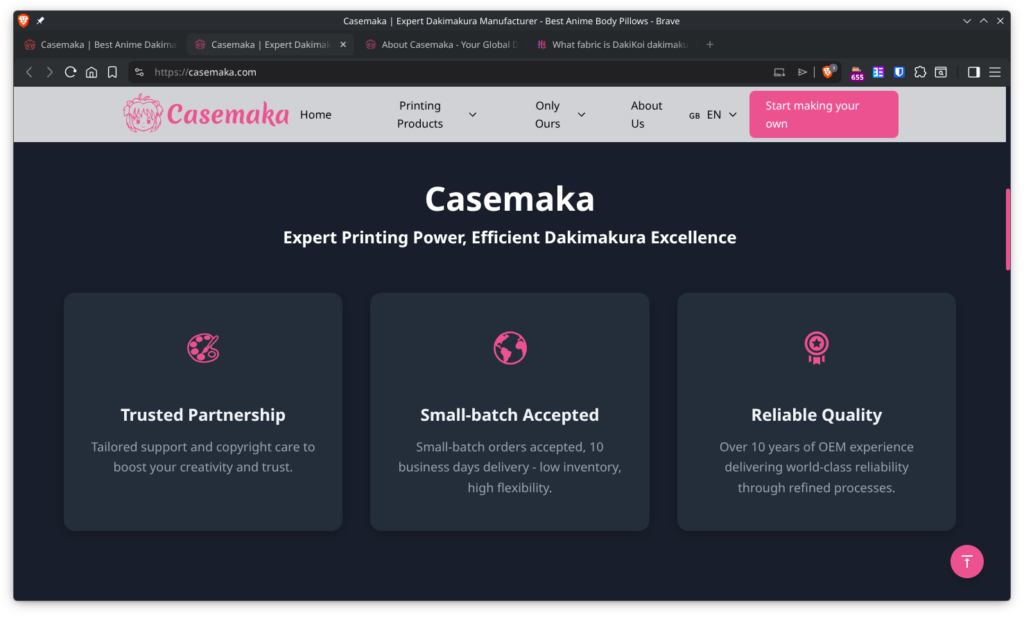
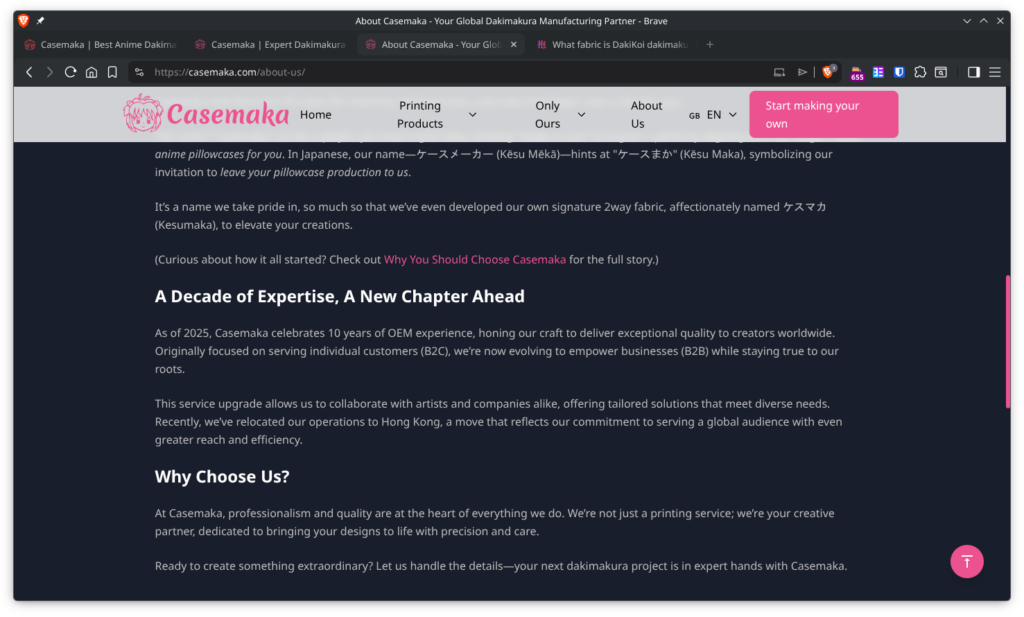
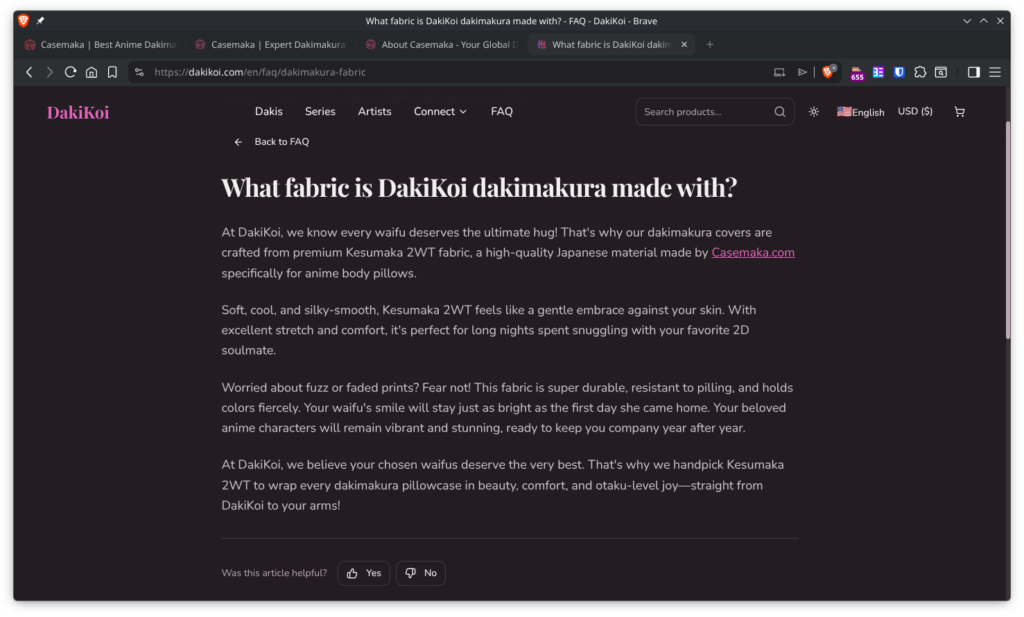
Due to Casemaka rebranding at the same time as DakiKoi launched, some suspect it’s actually the same people behind both brands (it’s impossible to prove or disprove this with publicly available information, since Casemaka is a Hong Kong-based company and DakiKoi is a semi-anonymous multi-national operation). Others don’t make the assertion that the two groups are the same, but still think DakiKoi’s committing an act of wrong by patronizing the known prior-bootleggers Casemaka. One of the people who’s spoken out about this is Cocona, an employee of Dakimakuri (a Western print-on-demand daki shop, where I bought my inner pillow and overcover).
Here’s where I stand on these concerns:
- If a group that used to bootleg has stopped selling bootlegs and has decided, for moral or market reasons, to become a legitimate operation, that seems like a good thing.
- If Casemaka was going to rebrand to try and hide their past, it seems like it’d make more sense to drop their old name altogether, instead of keeping it and then spinning up a second name to pretend to be their own client.
- If DakiKoi really is a separate group, I can understand why they might not care about their printer’s past, and why people attacking them over this when they just handle the designs might seem weird to them.
- With all of that said, I do understand why artists and employees of other shops who had their designs ripped off by Casemaka would be upset at anyone in the industry choosing to work with Casemaka at all.
You can decide for yourself based on that information whether it’s okay to purchase from DakiKoi or not. Personally, because they’re not bootlegging and their printer is not currently bootlegging either, I wouldn’t lose sleep over purchasing individual covers from DakiKoi. But if you see things differently, that’s a legitimate point of view as well. I do think DakiKoi would do well to explore alternative printers, if only to head off this criticism that distracts from their products.
DakiKoi’s Designs
DakiKoi has a relatively small number of designs compared to other on-demand shops– they had 8 around the time they first approached me, and have 17 at the time of writing this blog post. A surprising number of their initial designs were from Chinese-developed mobile games (such as Genshin Impact, Honkai: Star Rail, Azur Lane, Zenless Zone Zero, and Blue Archive). On the anime side, they’ve got a small selection from My Dress-Up Darling, Kaguya-sama: Love is War, and Rising of the Shield Hero. They also have multiple designs from Hololive.
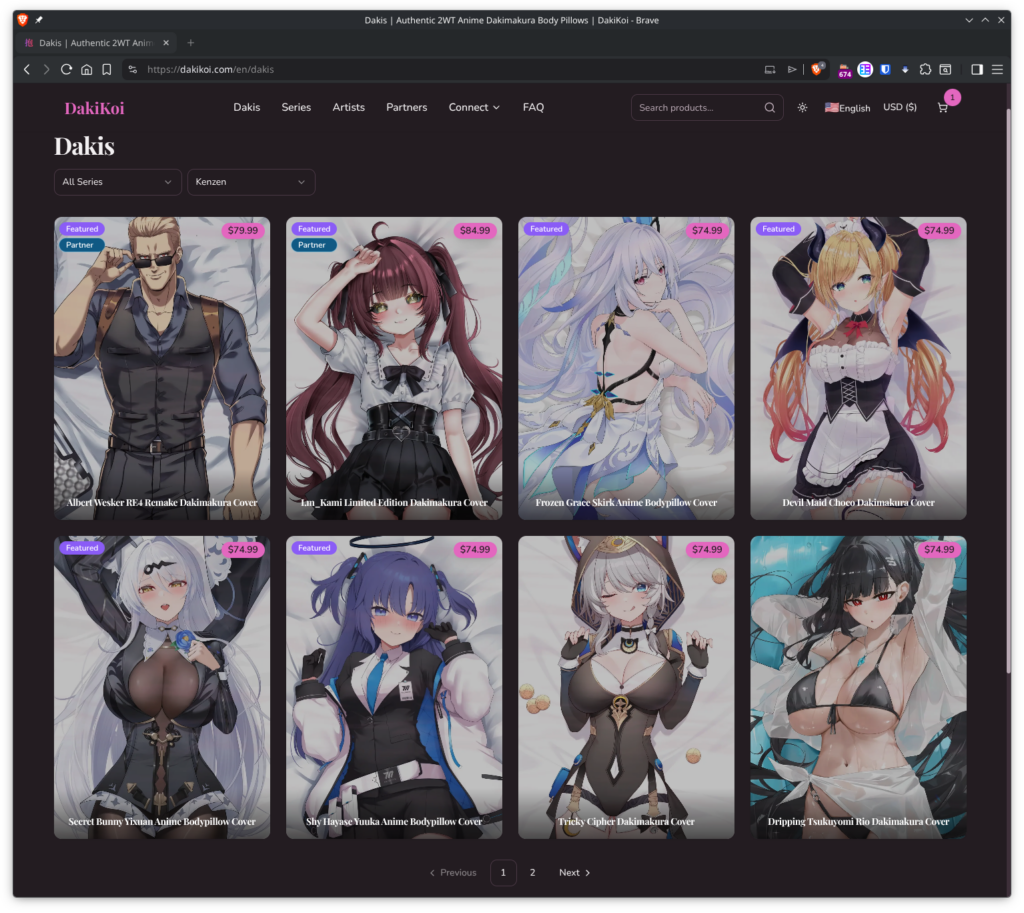
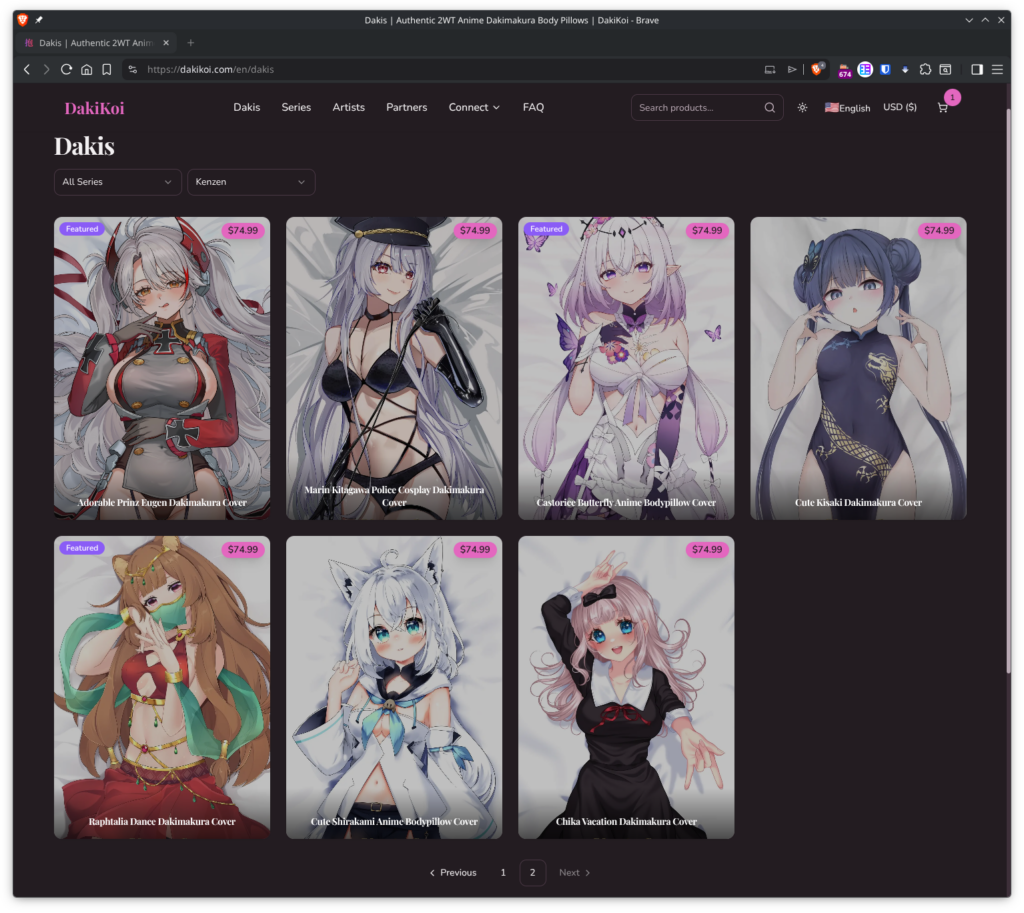
Most of DakiKoi’s designs include two variants: kenzen and ecchi. (“Kenzen,” 健全, translates to “wholesome.”) The ecchi designs are just that– like ecchi anime, they’re mildly erotic, but contain no actual nudity (genitals and nipples are never visible). Some of the designs only come in a kenzen variant.
I was given a redeemable code to choose a cover of my liking, so I’ll comment on a few of the designs DakiKoi has available and how I made my pick.
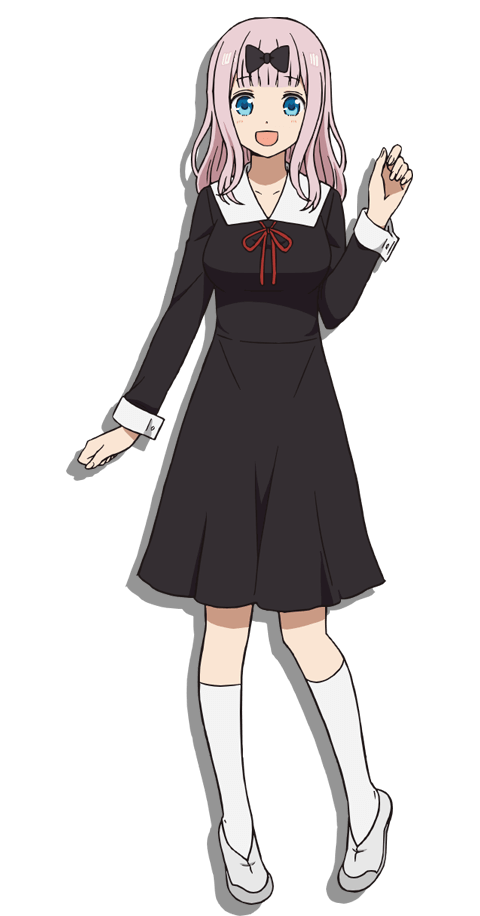
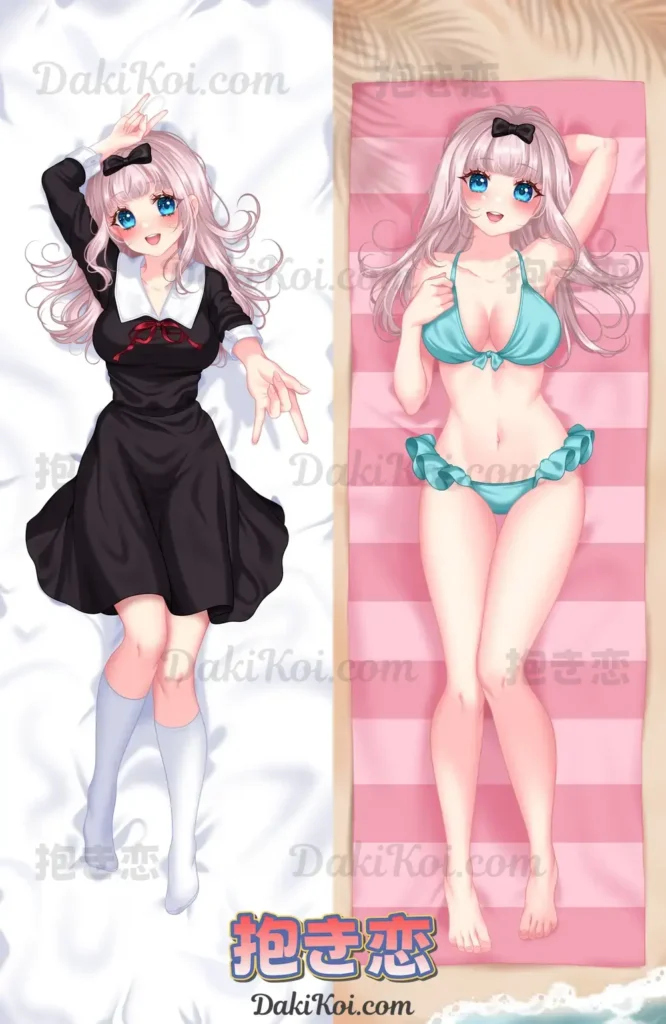
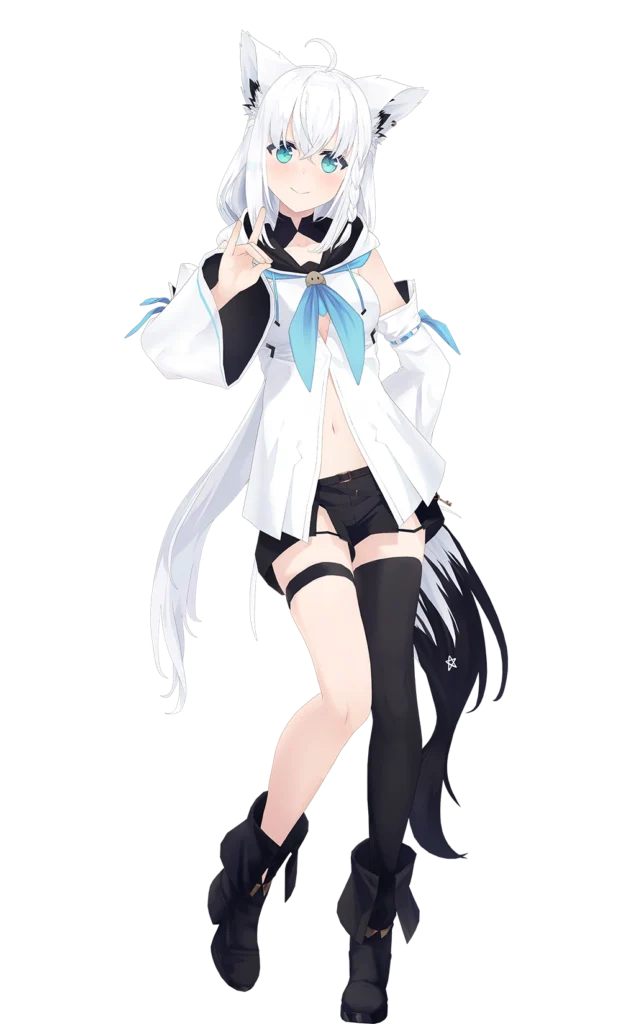
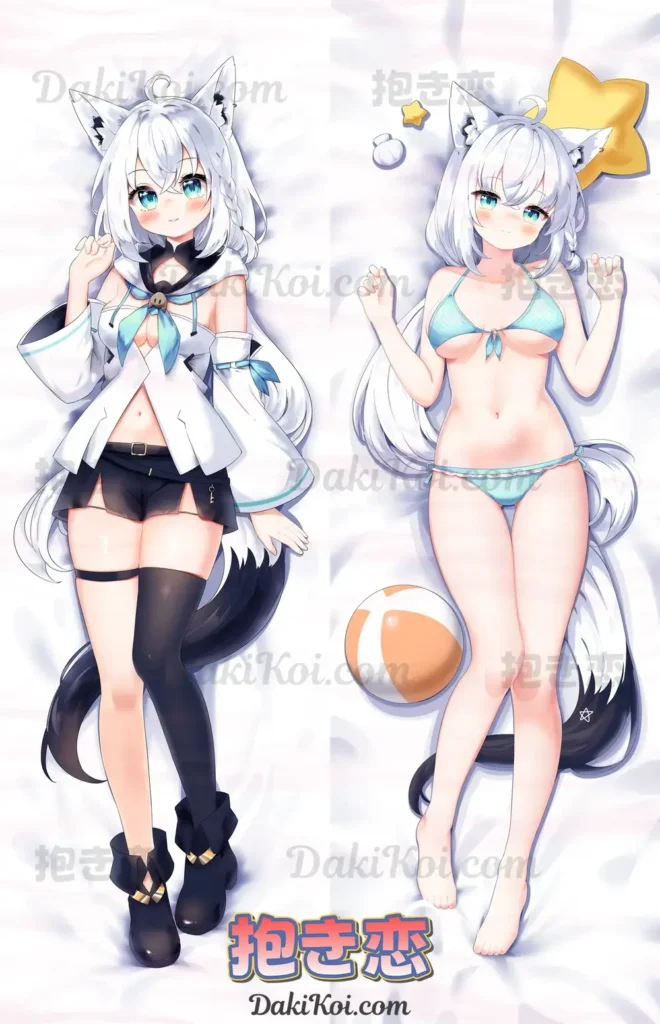
The first two designs that DakiKoi published– featuring Chika Fujiwara from Kaguya-sama: Love is War and Shirikami Fubuki from Hololive— were not personally to my liking. They both contained huge eyes and general lolicon proportions, which aren’t very accurate to the source material. I was surprised to see different artists listed for these two designs, given their similarities.
I ended up selecting the kenzen design of Marin Kitagawa from My Dress-up Darling, since it’s a character I know and the design is fairly true to the source. I wasn’t a huge fan of the “police cosplay” on the back of the kenzen design, but it has the advantage of basically bundling an ecchi design into it. The actual ecchi variant of the product looks nearly identical on the back, while the front of the ecchi variant features Marin in a bra and panties, which seems rather plain despite the underwear’s subtle pattern.
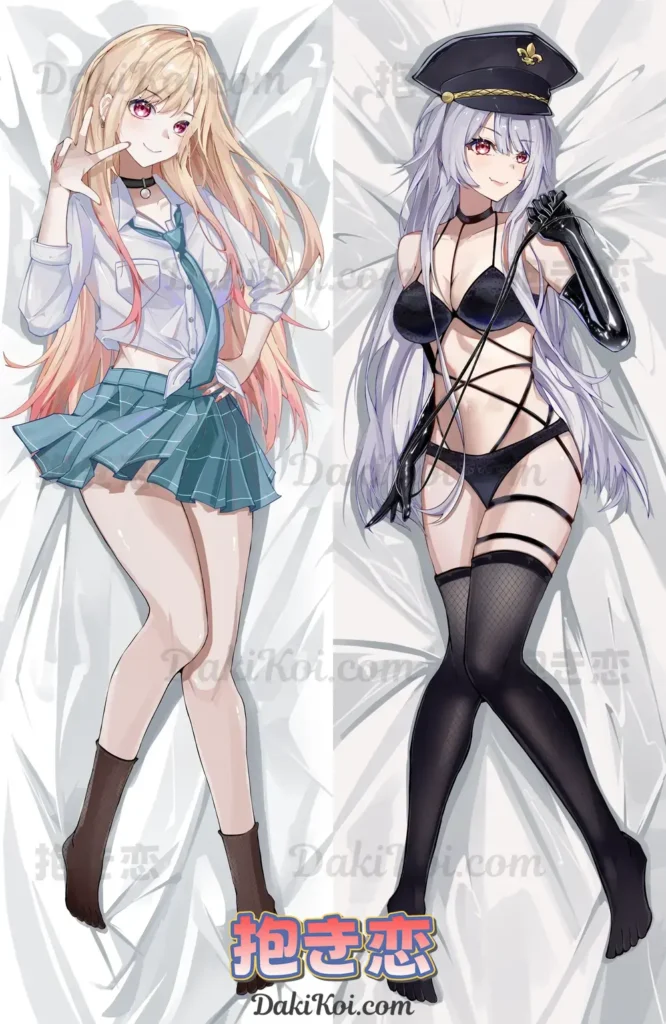
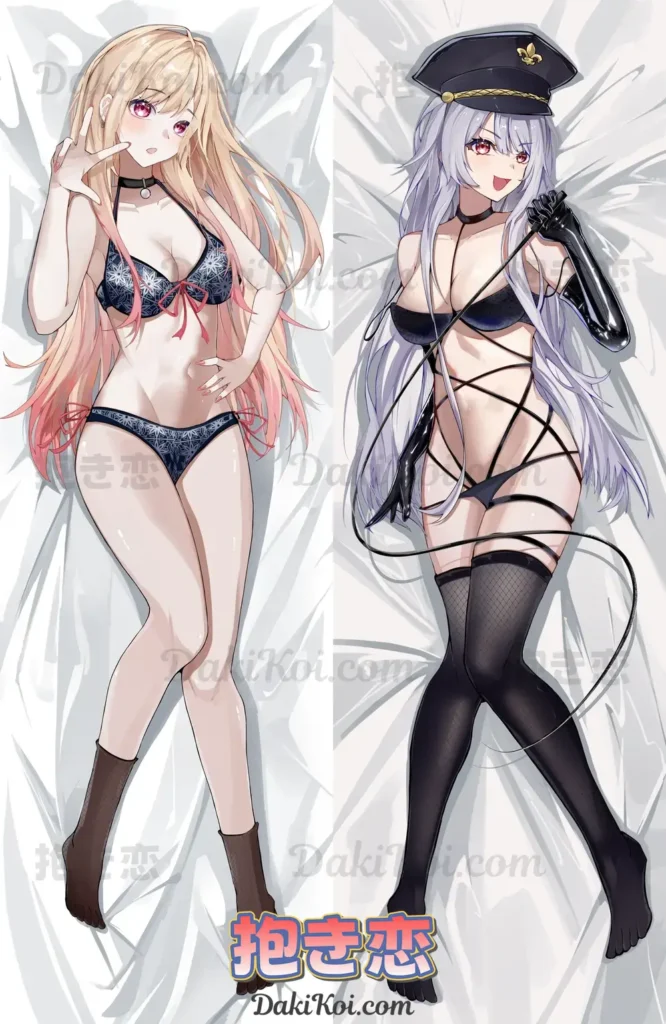
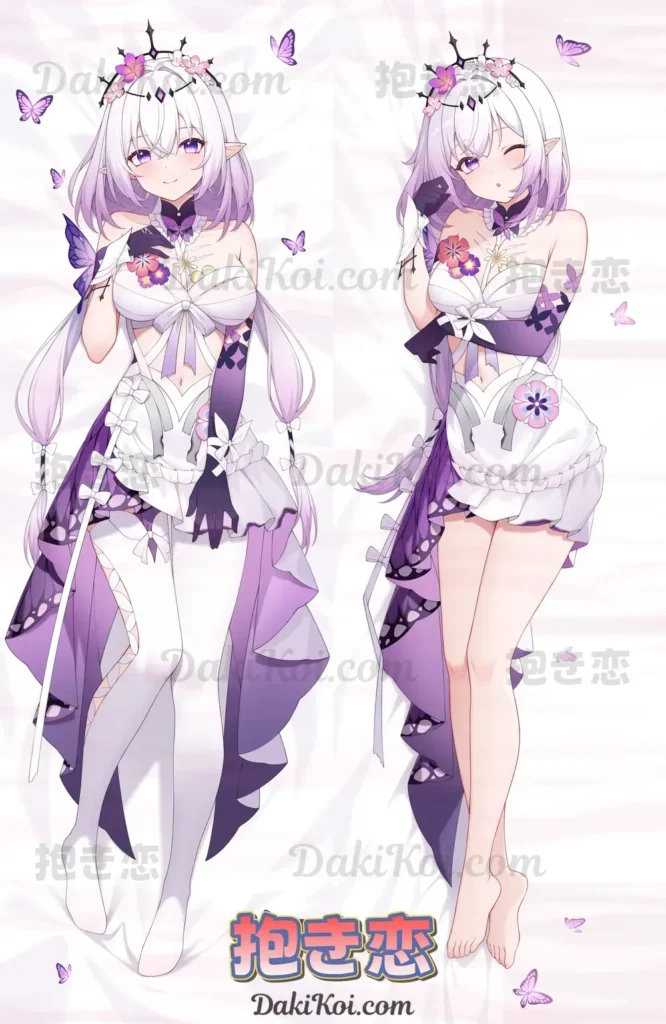
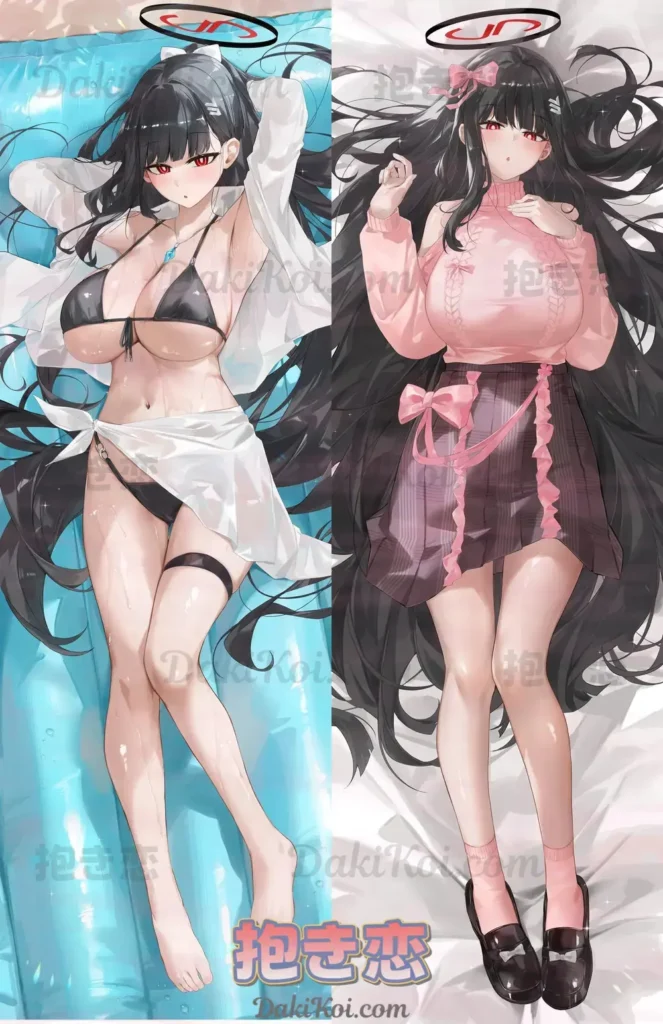
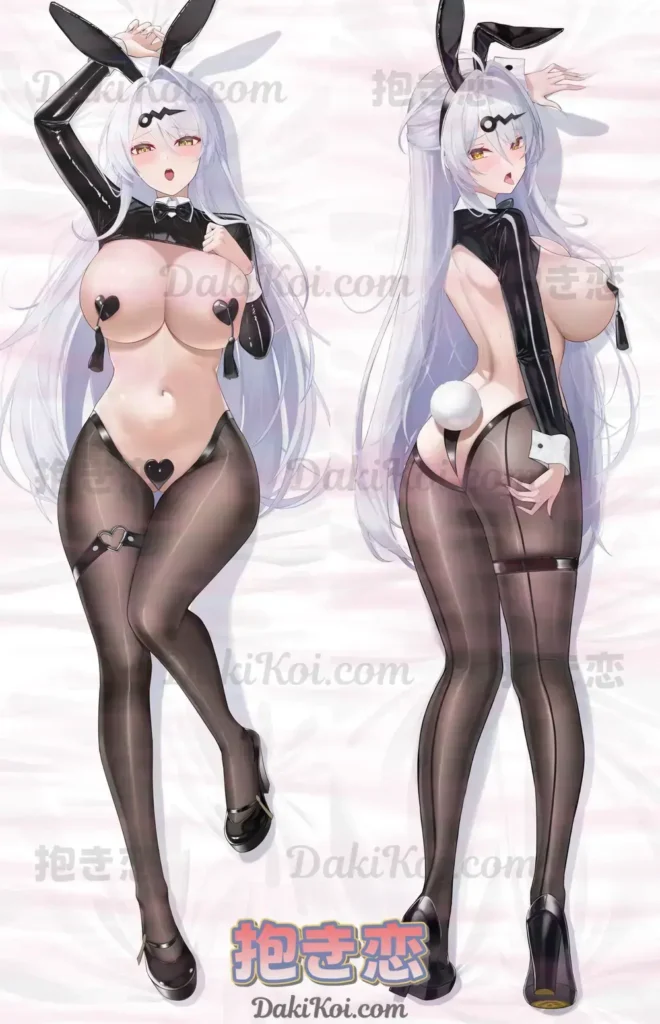
This was far from an easy choice. I considered Castorice from Honkai: Star Rail, since that design has a similar flat art style that I like. At the same time, I was visually tempted by a bikini design of Tsukuyomi Rio from Blue Archive as well as an ecchi bunny-girl design of Yixuan from Zenless Zone Zero, which are both much shinier (and more well-endowed in the chest area). But I don’t actually play any of those games, so I figured it wouldn’t make sense to pick one of those characters just for the eye candy.
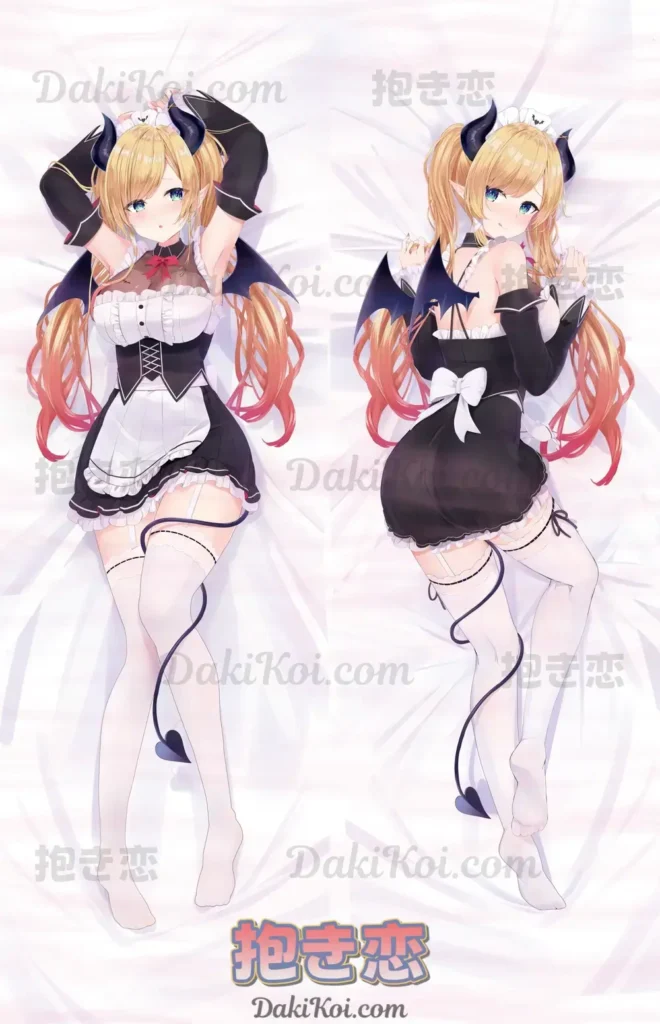
My reviewer coupon was valid until the end of 2025, and I waited until almost the end of the year in case any other designs I liked showed up. Only a few weeks after I placed my order, they added a maid outfit design of Yuzuki Choco from Hololive, which I probably would’ve picked instead if it had been available a little earlier.
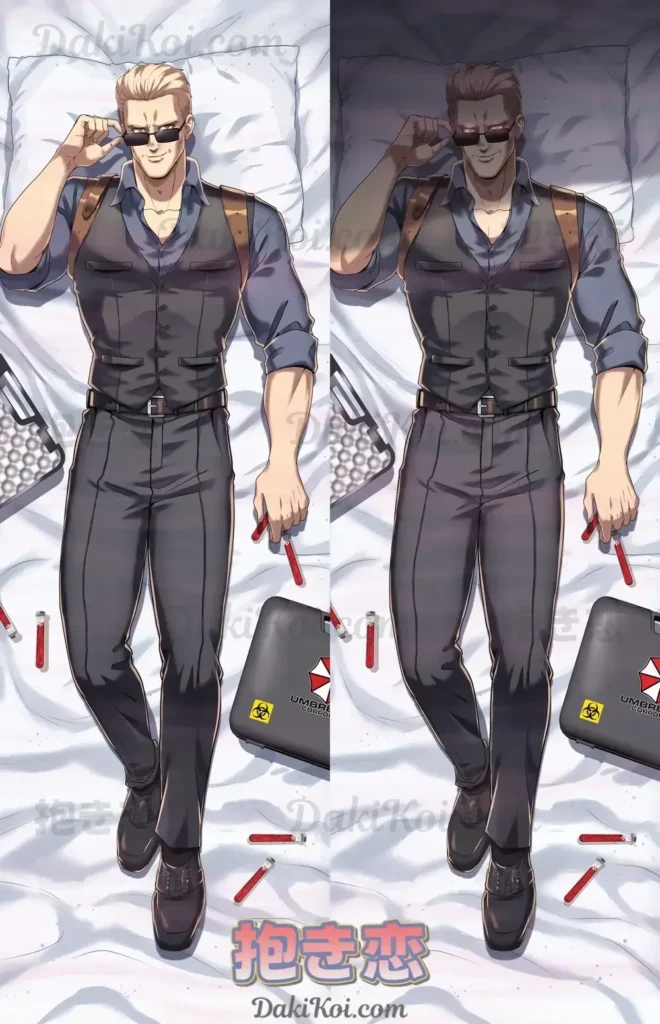
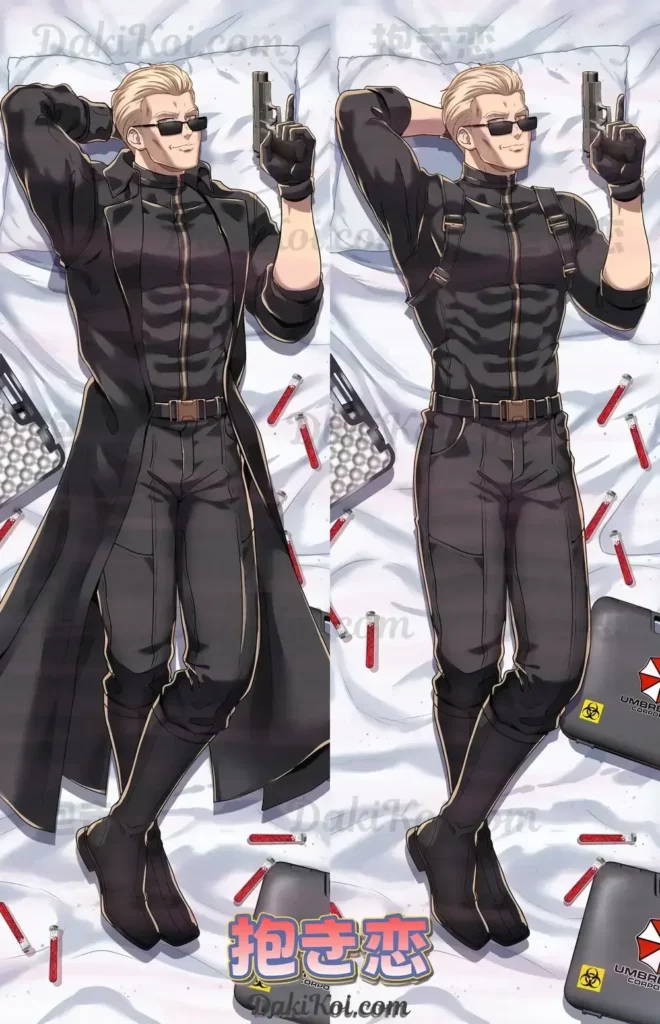
The only product choice I don’t understand has to do with two of DakiKoi’s more recent designs, both for Albert Wesker (a villain) from the Resident Evil video game series– and it’s not because he’s a man! These two designs both look nearly identical on the front and back. It seems like it’d make a lot more sense for one of these designs to be the front of a product and the other design to be the back, but there’s no mention of a mix-and-match capability on DakiKoi’s website.
Overall, I think the variety from working with lots of different artists is a good thing, and I think most people could find something they like despite the small selection. DakiKoi has been releasing new designs seemingly every few months, and they tend to announce them on their X account (while their Pixiv profile is missing the most recent few).
Ordering & Fulfillment
The DakiKoi website is fairly barebones (apart from some generic SEO images and text that, frankly, take away more from the browsing experience than they add). It’s very easy to place items in the cart and check out. There’s no account system with DakiKoi– checkout’s handled through Stripe or PayPal (with Stripe the only option if you’re using a coupon code), and after checking out, you get an email receipt with your order number. Any contact before or after ordering is handled through email.
I placed my order for the kenzen version of the Marin Kitagawa design on 14 December 2025. Six days later, I received an update email stating my order was nearly ready, but that it was being routed through Tokyo (presumably from China) apparently for tariff purposes. Five days after that (on Christmas morning), I got the confirmation that the order had been shipped out from Tokyo, including a Japan Post tracking link.
You can also enter your email address into a tracking page on DakiKoi’s website to see all orders placed via that email and tracking links for each. This seems like a potential privacy risk, since no password or email confirmation is required to see the information, meaning you could enter someone else’s email address to see their past orders. While this page doesn’t show the specific products ordered or how much was spent, the tracking number can be entered into the postal service’s website to see what city and ZIP code it was delivered to. This could be a potential doxxing concern for those with anonymous online identities. It would be more secure to email a one-time link to access the results from this page, or to email the results themselves, instead of just showing them with no additional confirmation besides entering the email address. With all of that said, it does appear orders eventually stop showing up here once enough time has passed; my order history from December still showed up in May, but doesn’t anymore in June.
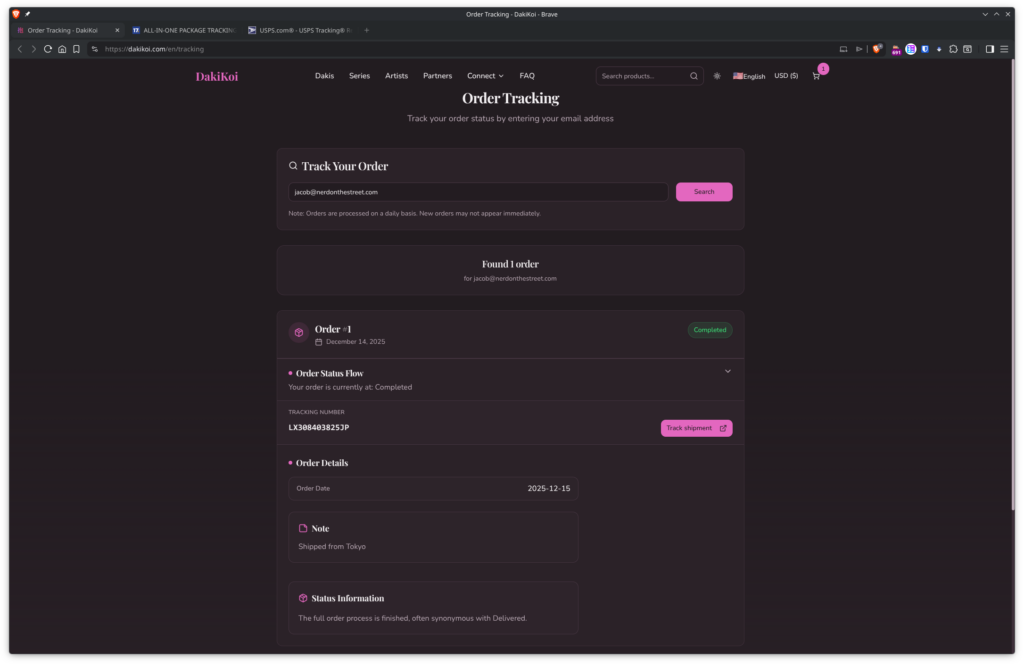
My order took about one week from when Japan Post says they received it to when the USPS made the final delivery. With the entire experience clocking in at 15 days from order to delivery, DakiKoi only took about a third of the time that Cuddly Octopus did when I ordered a single cover from them! I’ll explore how that’s possible later.
Unboxing
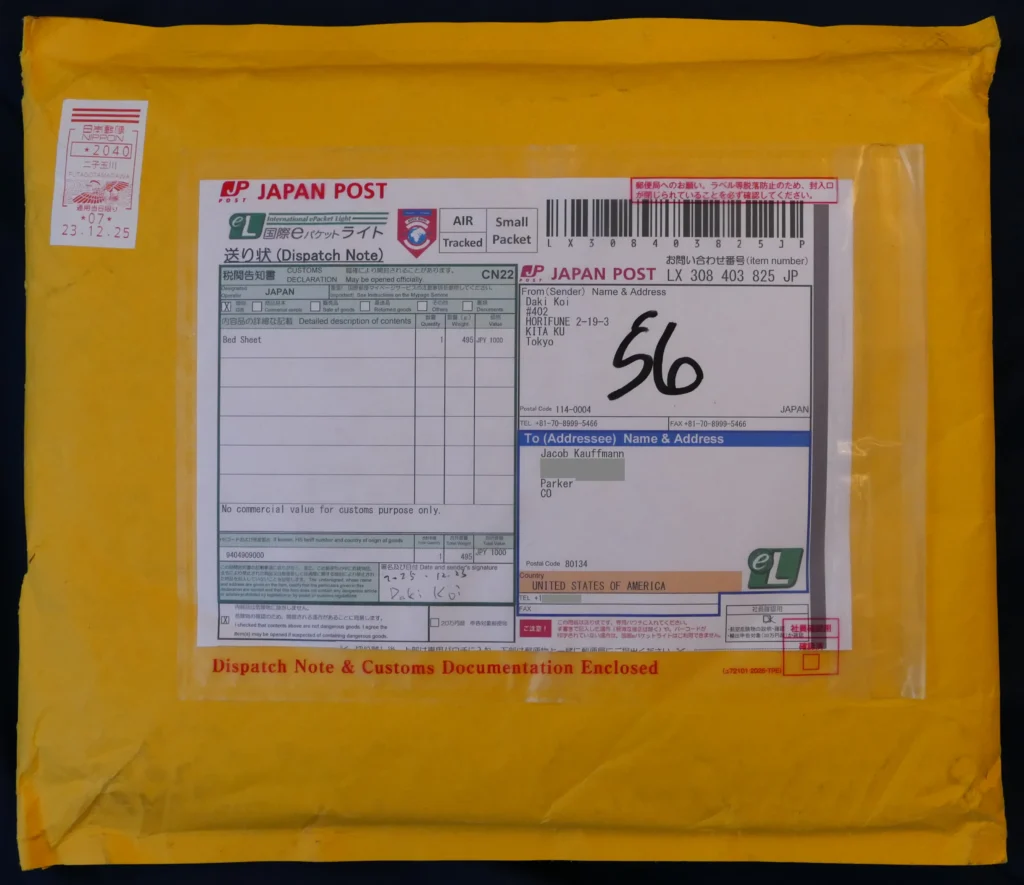
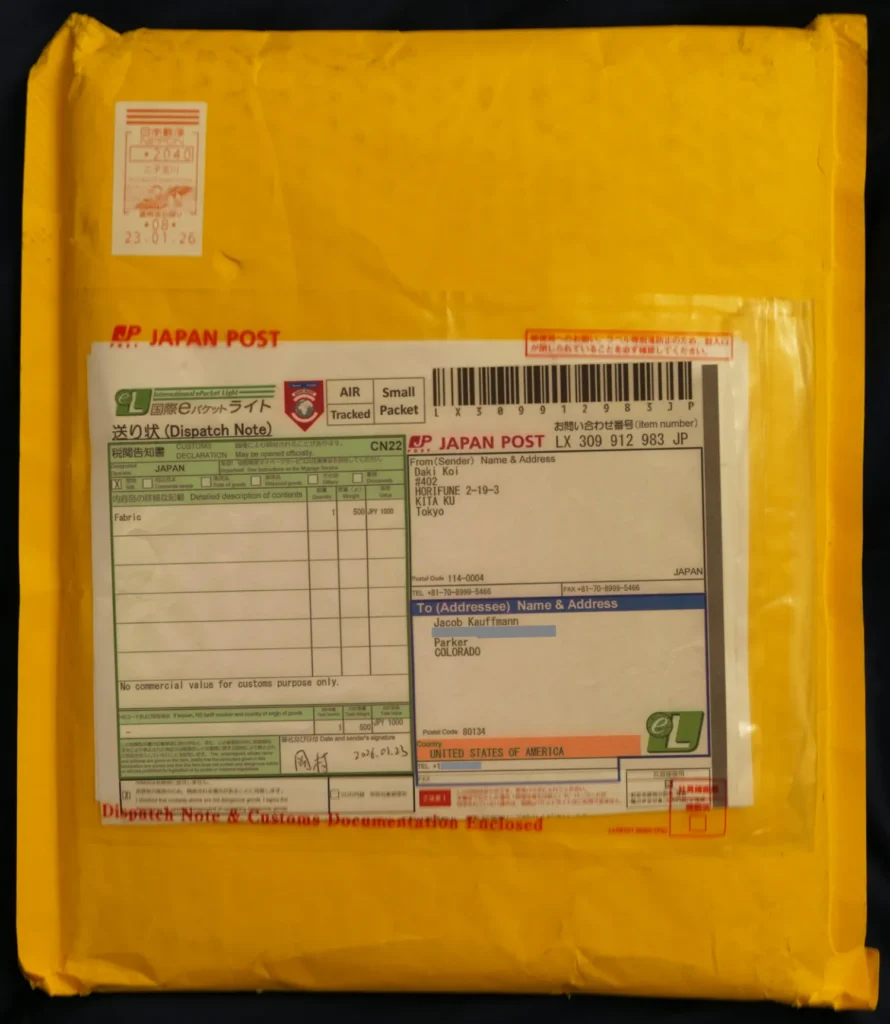
The daki cover was shipped in a yellow padded envelope. The Japan Post label classified it as a “bed sheet” for customs purposes, with a declared value of only ¥10 (less than $10).
Inside, the fairly standard clear bag showed a Casemaka information card inside, with a DakiKoi sticker on the outside. The QR code on the DakiKoi label simply points to DakiKoi’s homepage. On the reverse side, a shiny Casemaka seal shows the cover hadn’t been opened since leaving the factory.
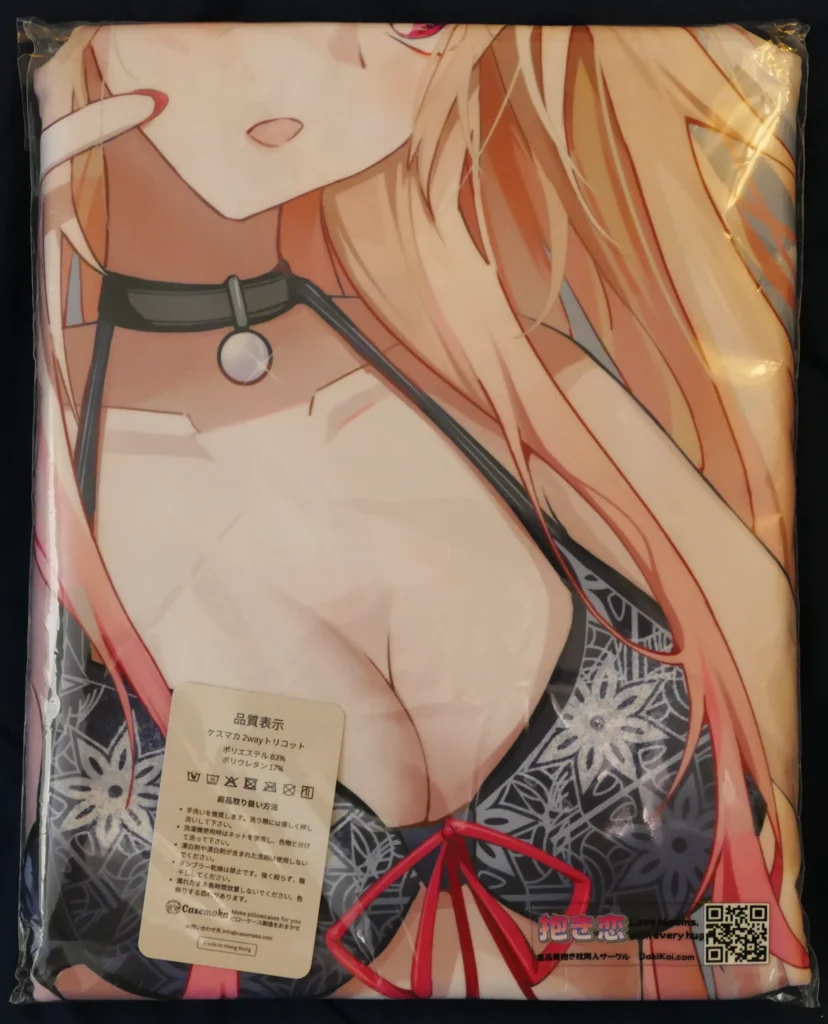
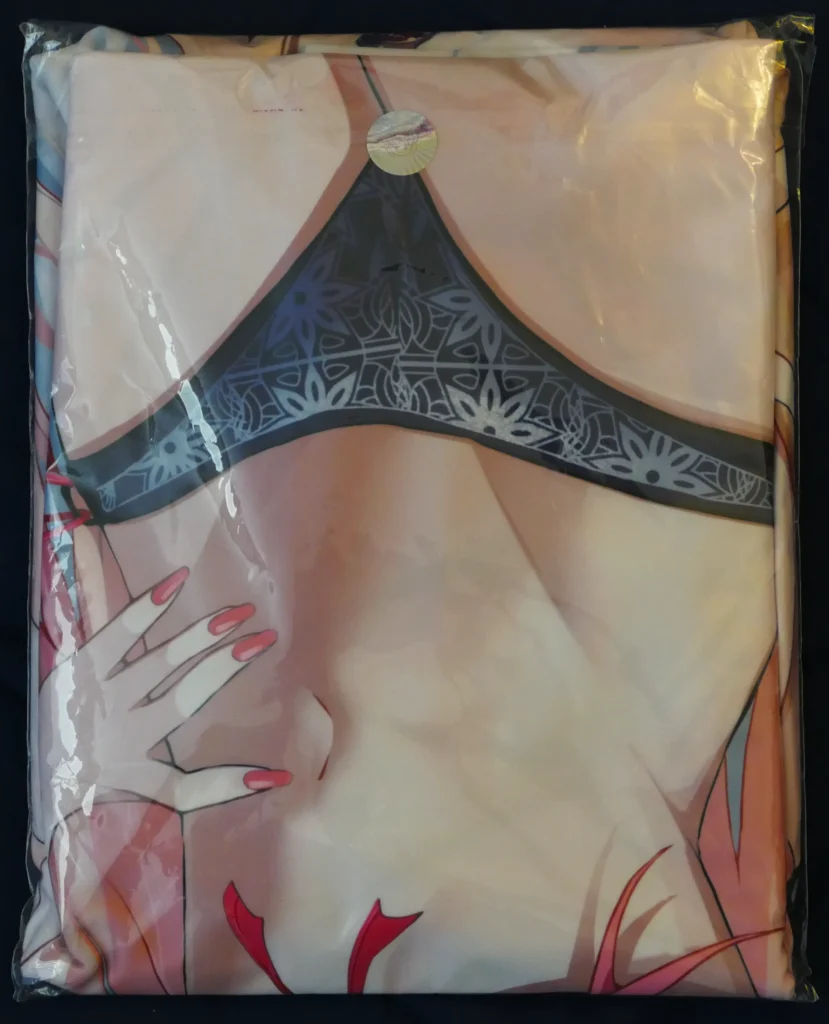
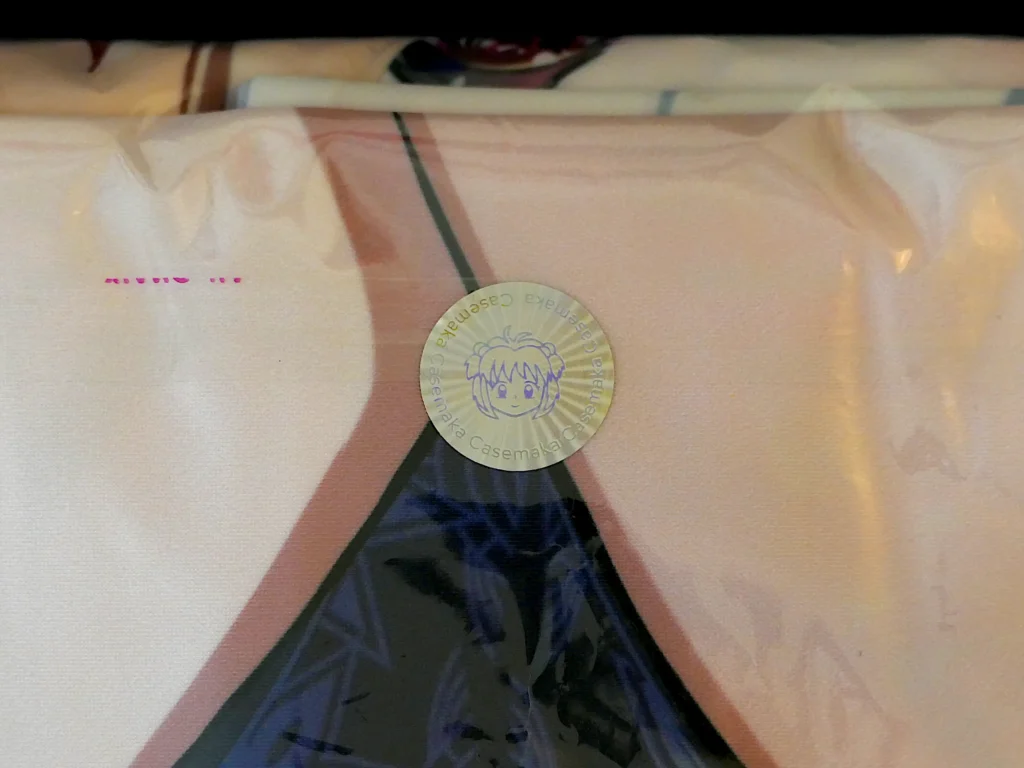
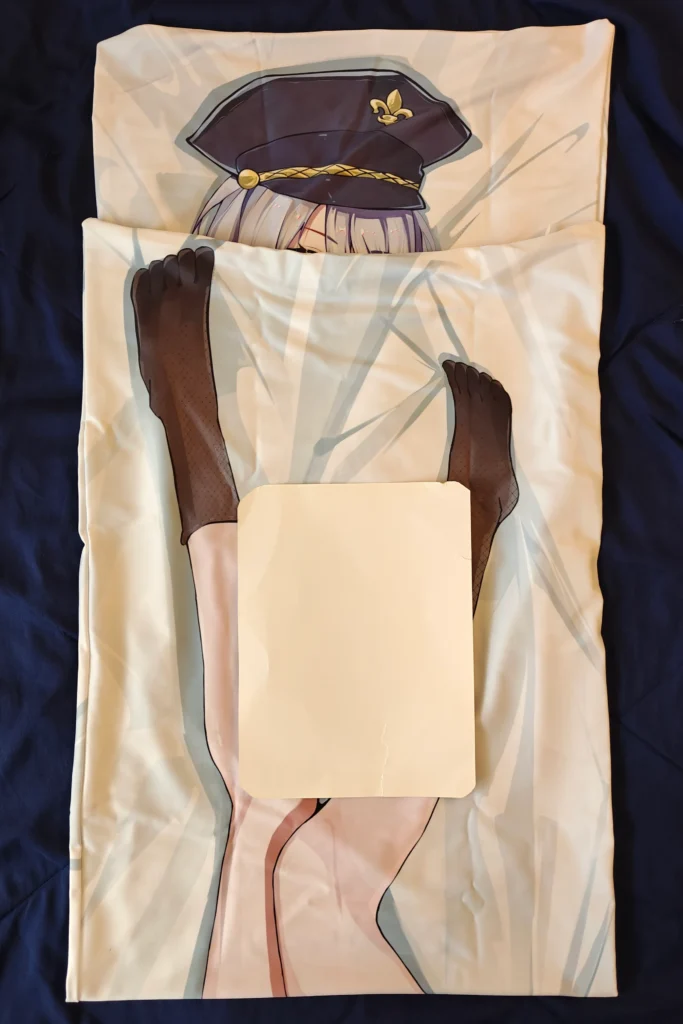
After peeling open the bag, I found the cover somewhat loosely folded around a slightly dented-up piece of white cardstock with rounded edges.
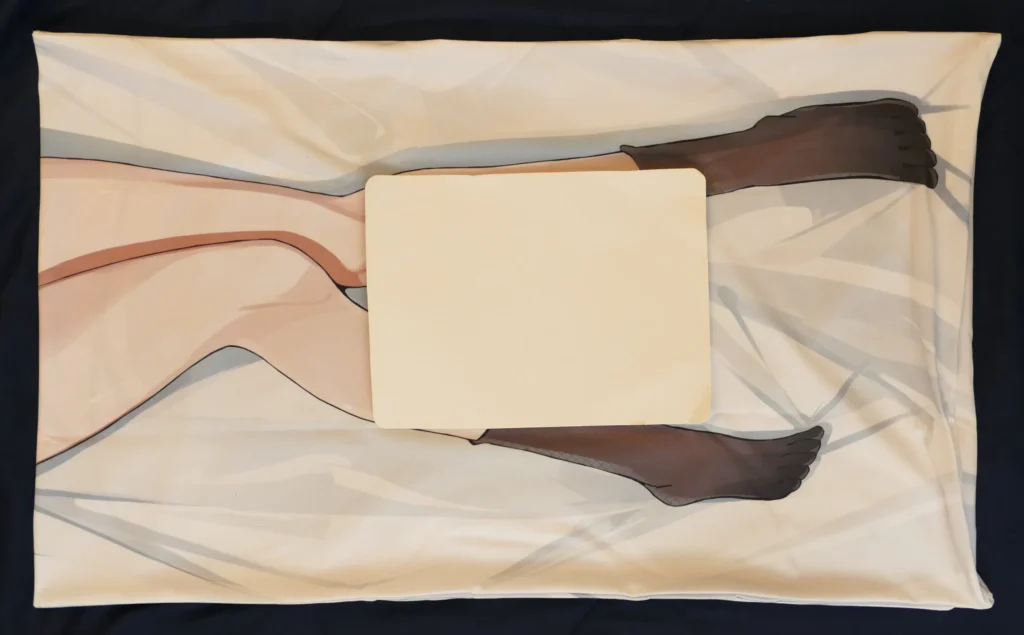
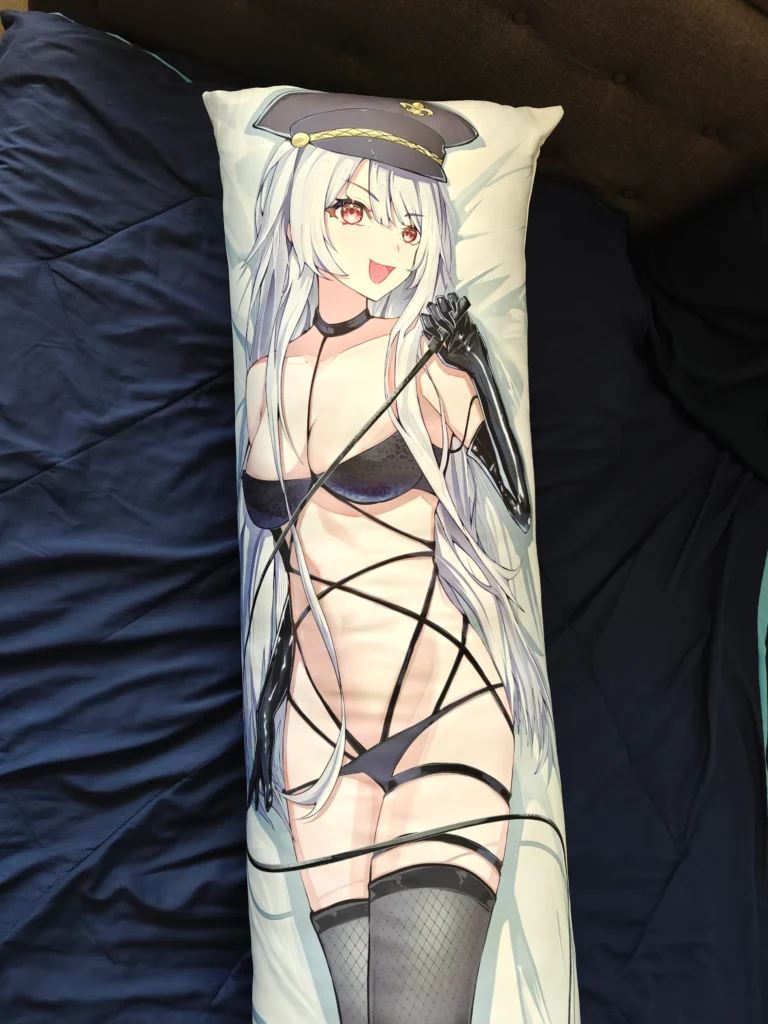
I began unrolling it onto my pillow (I’ve learned how to install them the “proper” way since my earlier posts). Partway through, when I saw Marin pulling one side of her panties down, I realized I had the wrong version of the design.
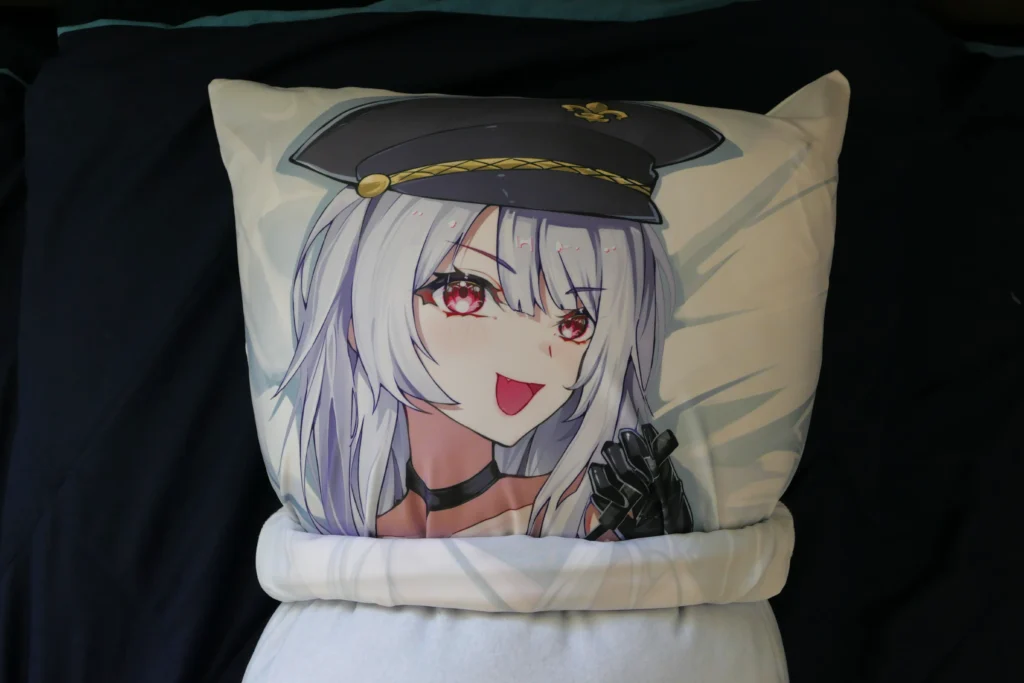
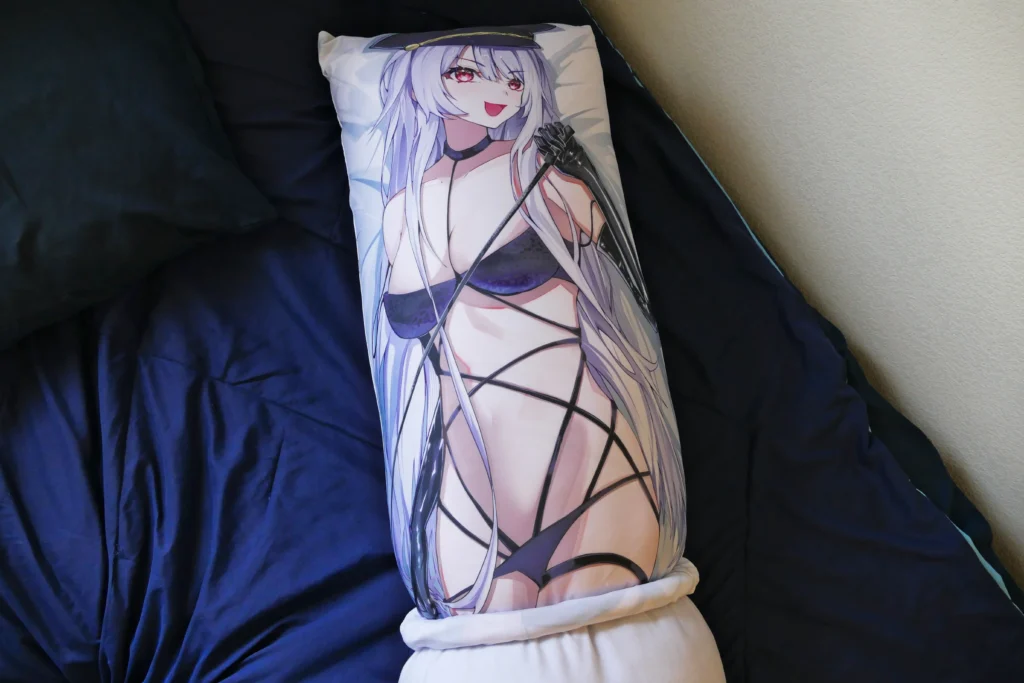
Keen-eyed readers may have noticed the discrepancy slightly earlier: when the cover was still in its original bag, you could see Marin’s patterned bra and panties. These features all belong to the ecchi version of the cover, rather than the kenzen version that I ordered. I hadn’t noticed before opening the bag because the bra and panties simply registered to me as being the nearly-naked police cosplay side of the pillow. It’s apparently the same mistake the DakiKoi staff made when picking my order.
I knew it wouldn’t be possible to return the incorrect cover when it was already partially installed (not to mention unsealed), so I went ahead and finished putting it on.
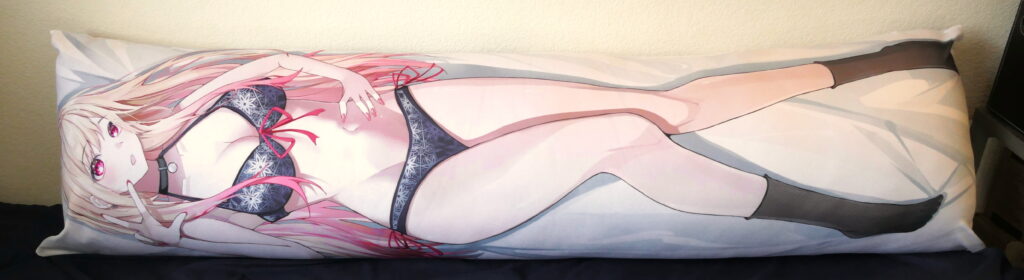
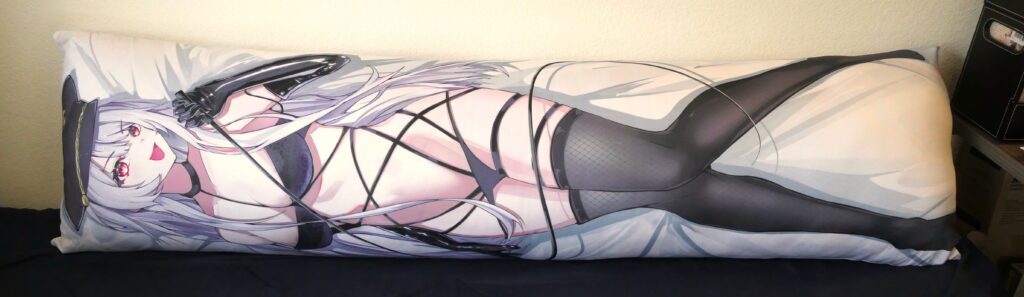
When I contacted Hebe about this, he explained that the supplier (who I assume is Casemaka) packaged some of the Marin dakis with the police cosplay side showing, and so one of the DakiKoi team members got the bra and panties confused with that side and shipped the wrong one. I mentioned that I’d specifically wanted the kenzen version of this cover so I could display the regular school uniform side in my lineup at all-ages convention panels, and Hebe agreed to send out the (actual) kenzen version to me in addition to the ecchi one I’d mistakenly received.
While I waited for the kenzen version to come in, I left the ecchi one on my pillow to start evaluating it with real-world usage.
Material
One thing I noticed almost immediately when handling the cover was how thin the fabric was. When holding it up against an indoor lamp, I could see through it more than I’d remembered with my other daki covers. To demonstrate this for the camera, take a look at this comparison of the DakiKoi Marin cover up against my window, next to a P80 Silkette cover of Yohane drawn by Tem10 and sold by JuneWaifu against the same window:
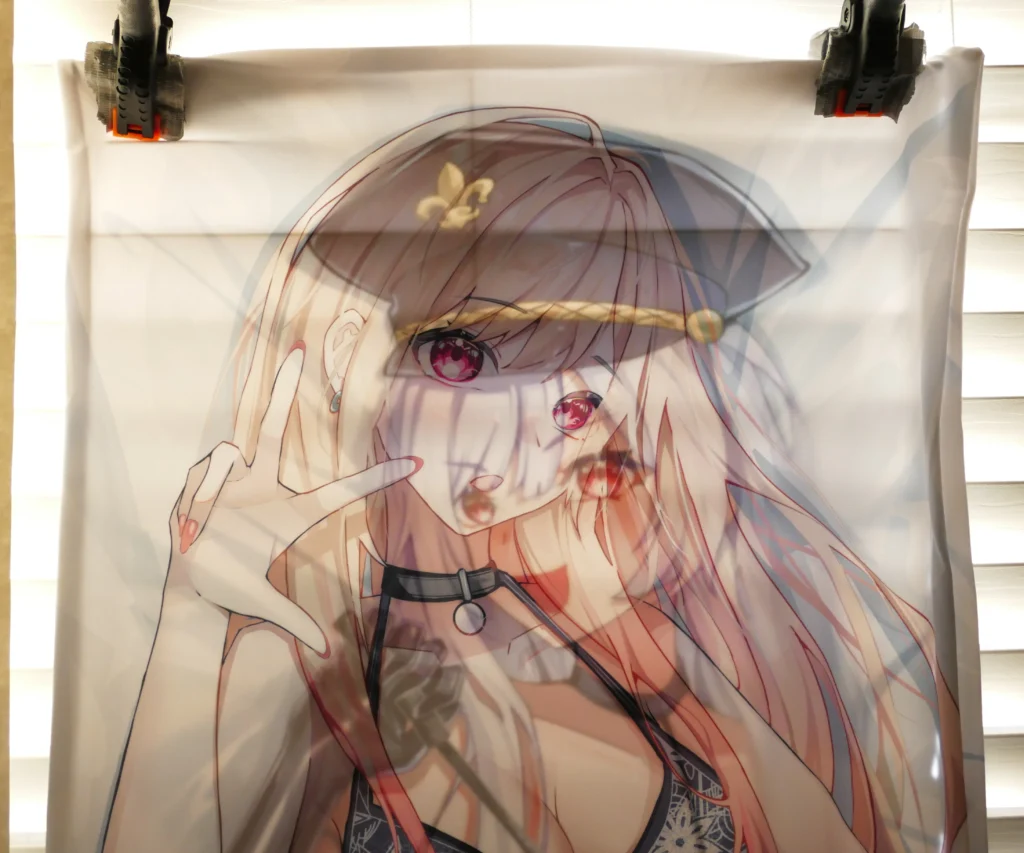
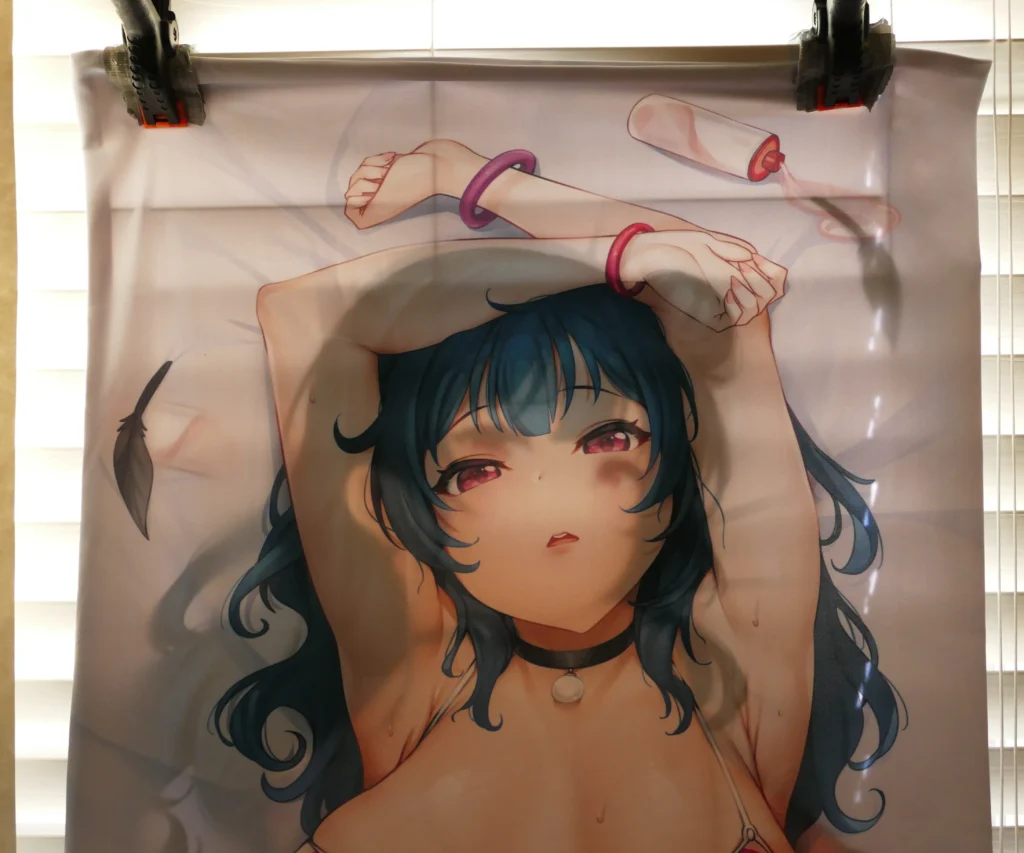
While you can certainly see through both covers when they’re backlit, the details on the reverse side of the Marin cover are more visible than those on the reverse side of the Yohane cover. The P80 Silkette material may not be the closest comparison to DakiKoi’s 2-Way Tricot, but the P80’s opacity is more similar to what I’m used to with Cuddly Octopus’s 2-Way Tricot as well.
I only noticed this during handling of the cover, and it didn’t seem to pose any kind of problem while the cover was actually on the pillow. For example, I didn’t find that hairs or other debris stuck in the surface of the pillow behind the cover were any more visible with the DakiKoi/Casemaka cover than with other brands of cover. Additionally, the lighter physical weight of DakiKoi’s fabric actually reminds me a bit of the Liketron 2-way Tricot of my Maki cover, and Liketron is generally considered a premium fabric brand, so light weight isn’t necessarily a sign of poor quality– it’s simply the style of Casemaka’s material.
Compared to my Cuddly Octopus 2WT covers that I’ve used for long periods of time, I feel that the Casemaka material is smoother or slipperier to the touch (think less “fuzzy” and more “sheer” or “silky”). It feels nice, and tends to run slightly cooler than other brands, which you might consider a positive if you tend to get hot in bed. I don’t think it’s overly fragile; I did get a couple of small nicks on the material over a few months of use, which is generally bound to happen with any cover you’re actually using during sleep.
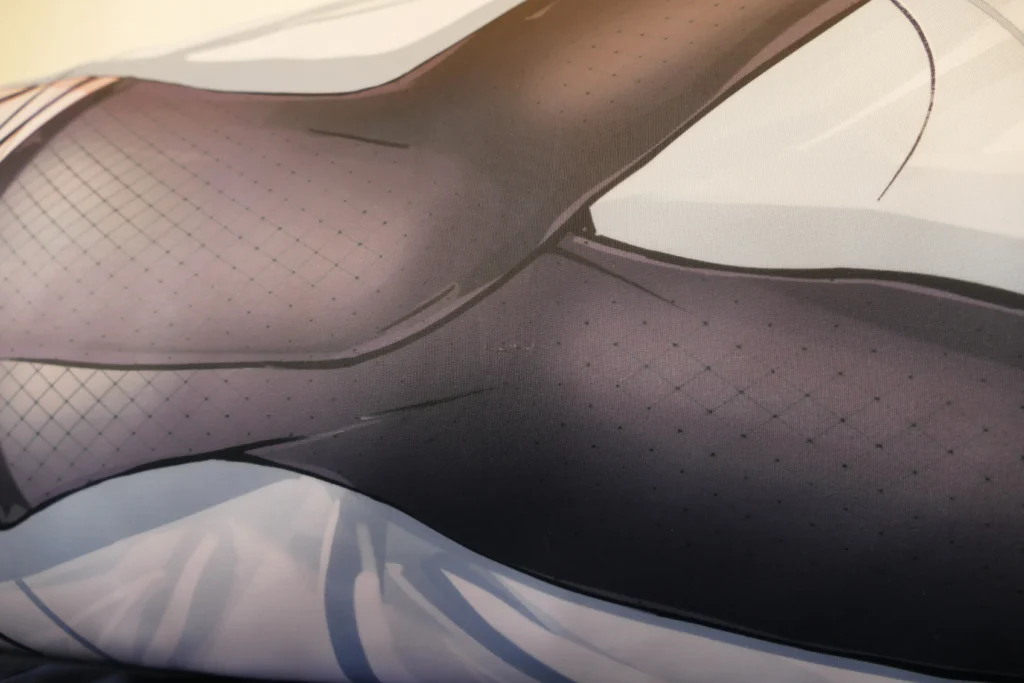
While the cover feels great and looks fine from a distance, I do want to note that the individual thread of the fabric is larger and more visible in the Casemaka fabric than in e.g. Cuddy Octopus’s 2WT. DakiKoi’s cover being slightly shinier might also bring the details of the thread out more. This results in a little less realism when looking at DakiKoi’s cover up-close. Take a look at a folded and bagged DakiKoi cover next to a Cuddly Octopus cover (tap or click to zoom in for more detail):
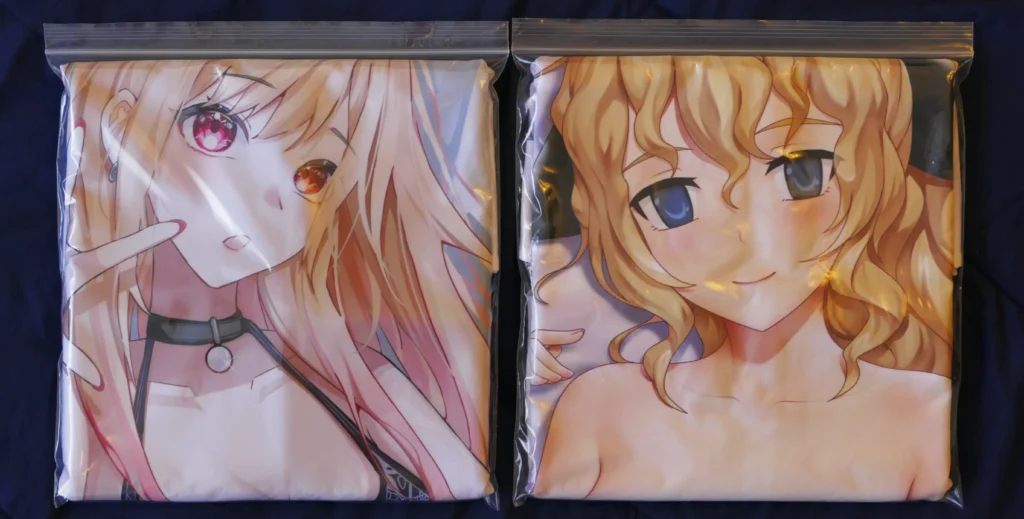
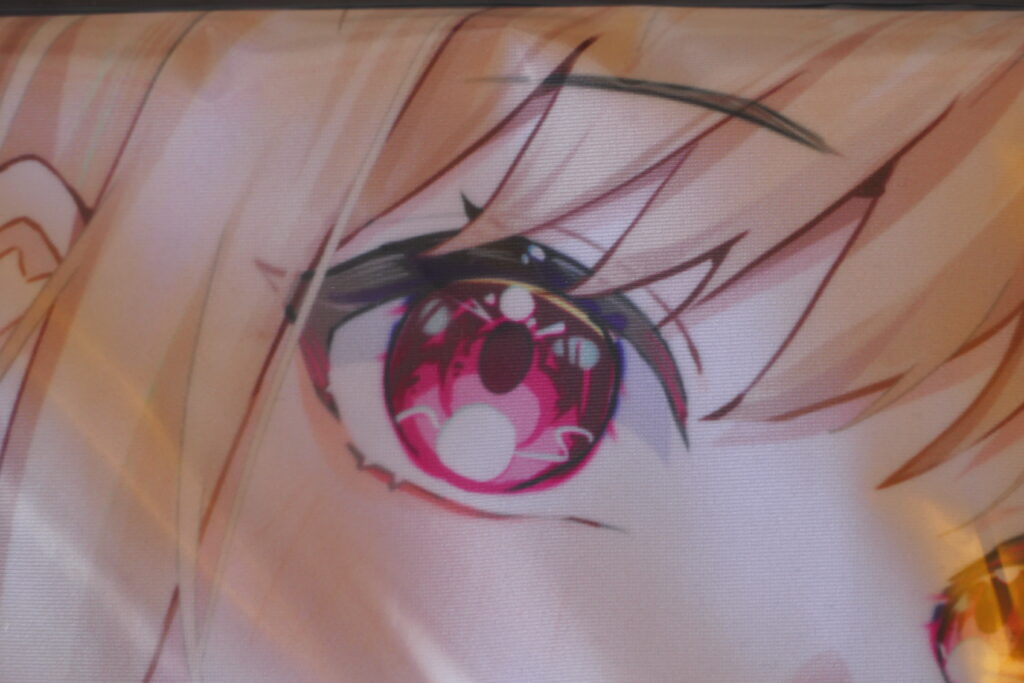
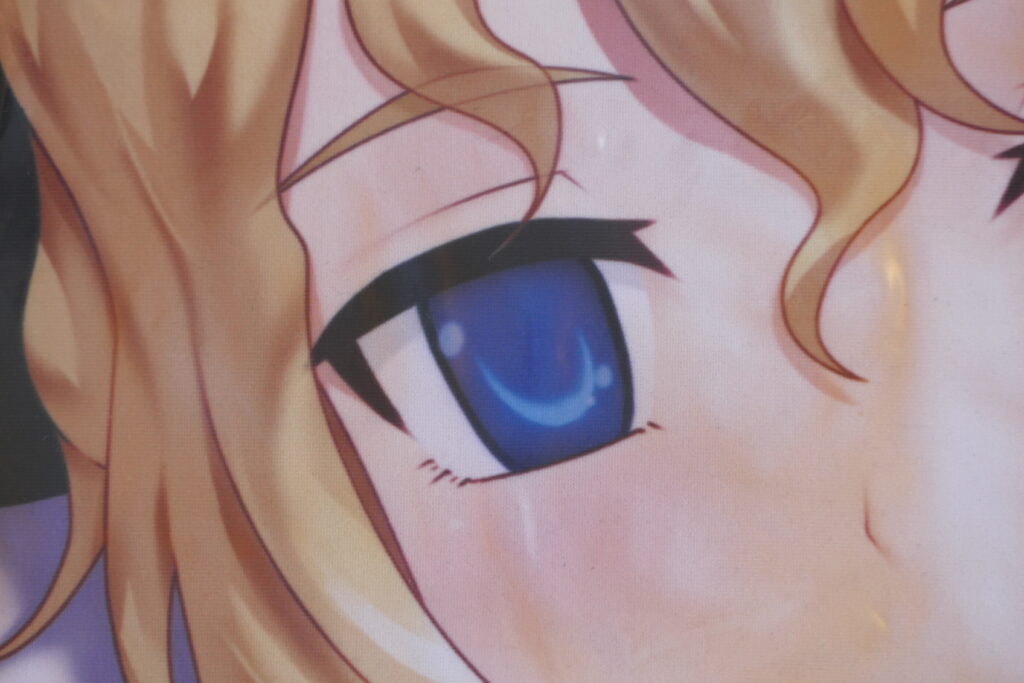
Again, though, the differences are minor overall, and not really noticeable when just using the DakiKoi cover on its own. I think Jiang’s artistic choices with color and line style affected the overall look of the DakiKoi cover more than the material itself– Jiang’s style features not only flat lines, but also flat colors. Some color-banded areas that I assumed were image compression artifacts on DakiKoi’s website turned out to actually be part of the design for this rendition of Marin.
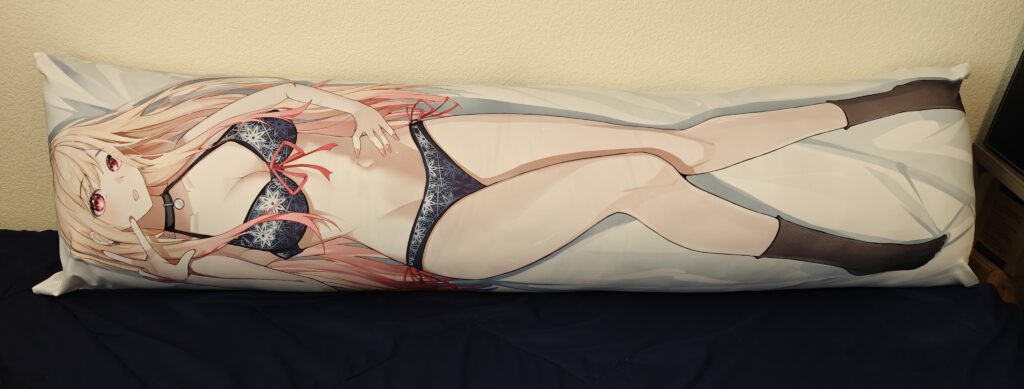
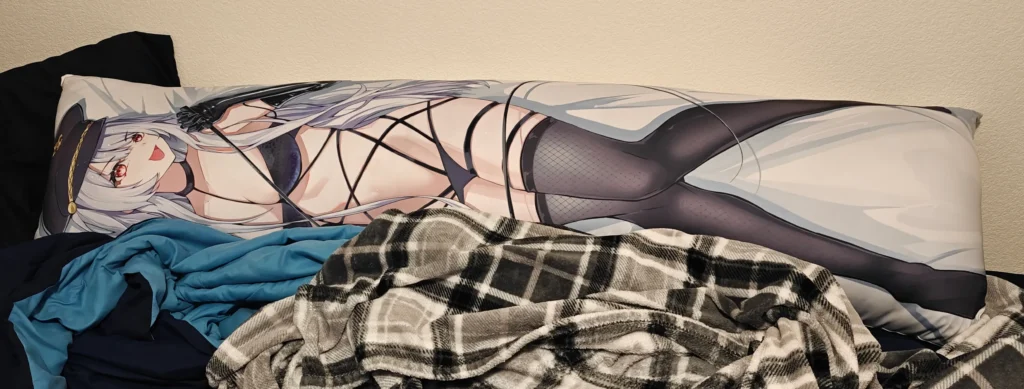
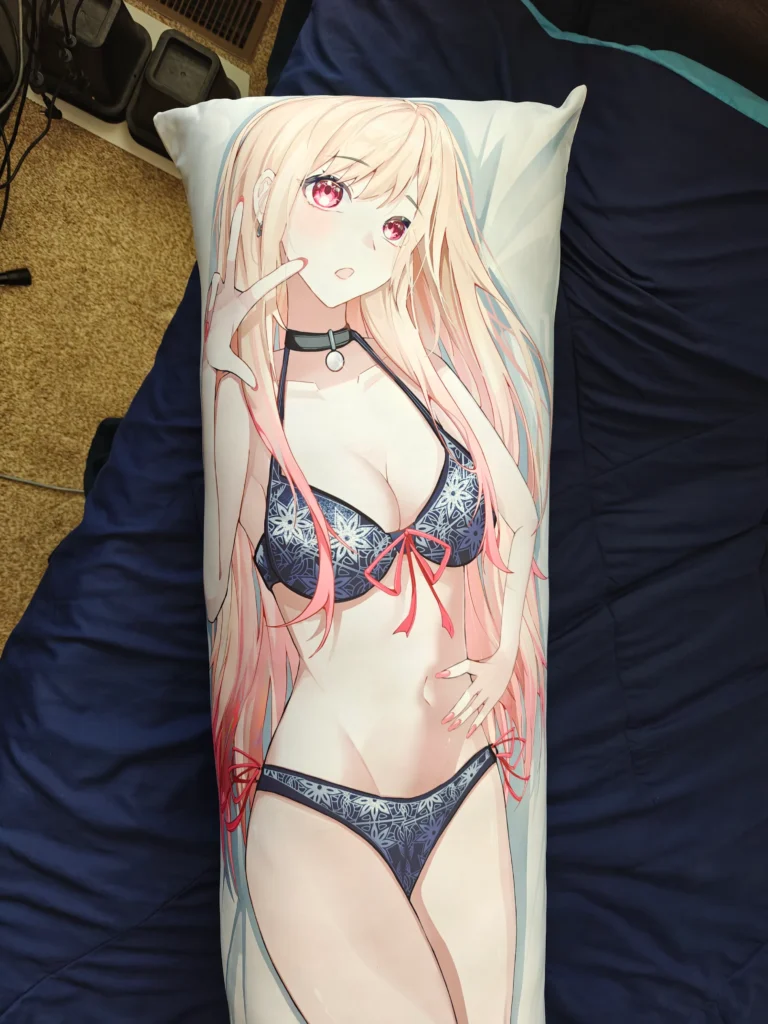
In the first shot above, you can see some lines running across Marin’s thighs and knees when the pillow wasn’t laying perfectly straight. That wrinkling effect happens with any cover, especially once the inner pillow starts to lose some of its fluff with age, but it may be slightly more visible with the DakiKoi cover due to Casemaka’s slightly thinner material.
Unboxing Again
When I received the corrected kenzen cover a couple of weeks later, I found the unboxing experience pretty similar to the first time around. The Japan Post label was applied in portrait instead of landscape this time, but it was once again a padded yellow envelope with a 1000-yen declared value, although the description this time said “fabric” instead of “bed sheet.”
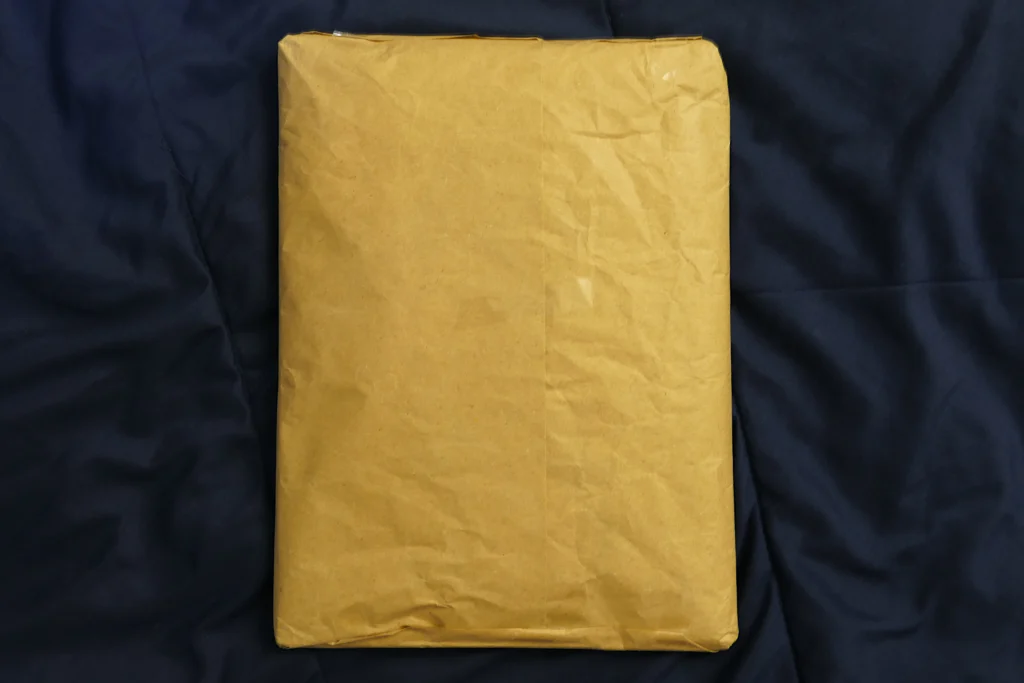
This time, the cover was wrapped in a piece of plain brown paper. As you can see, the loose folding style resulted in the cover partially unfolding and wrinkling up inside of the bag.
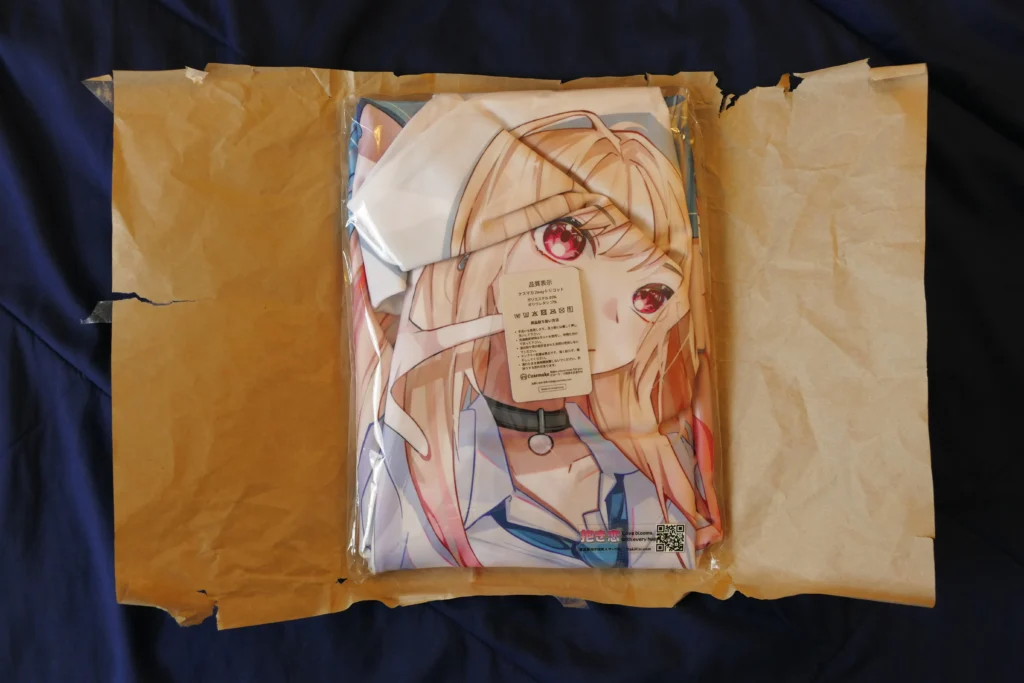
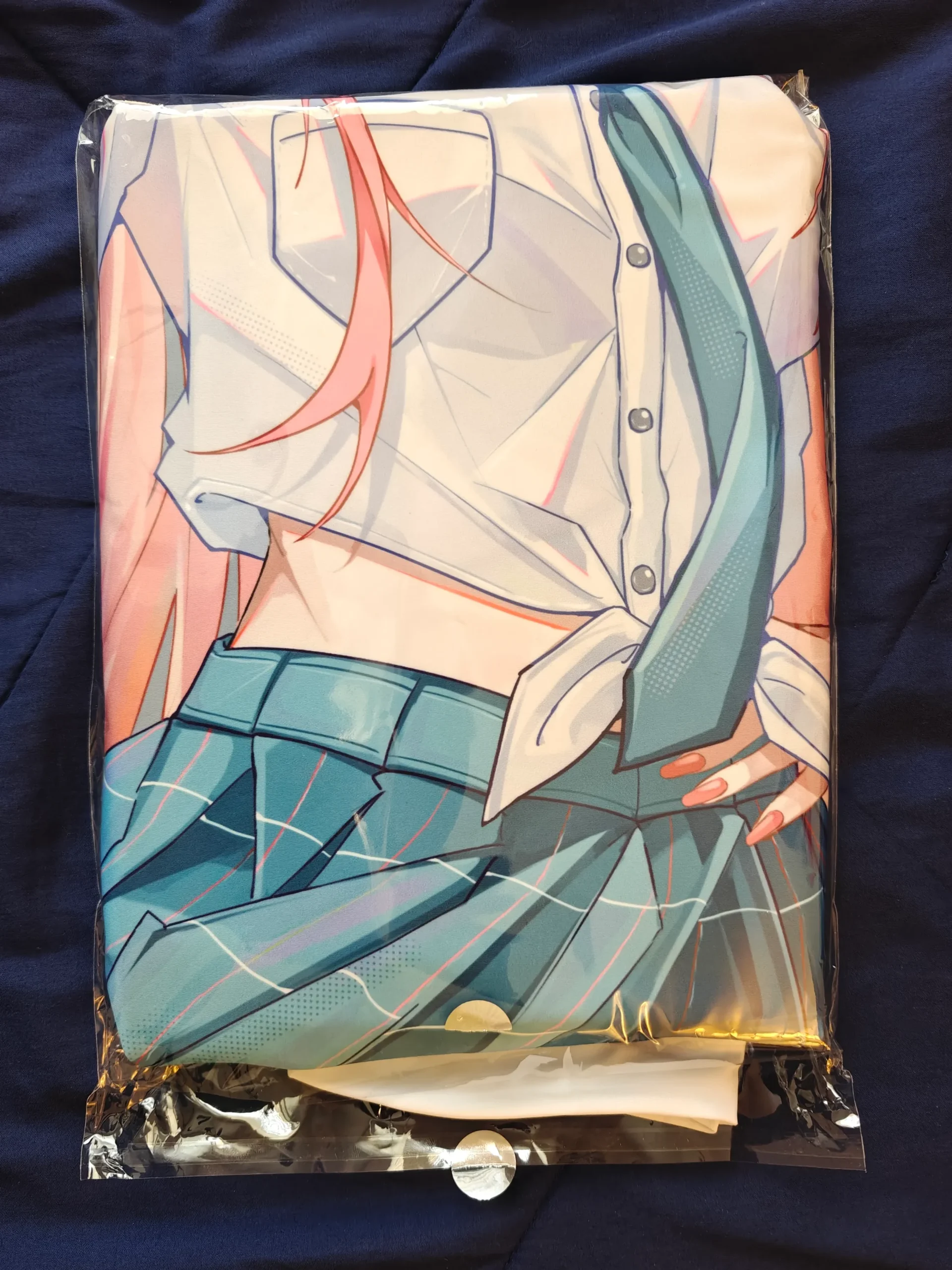
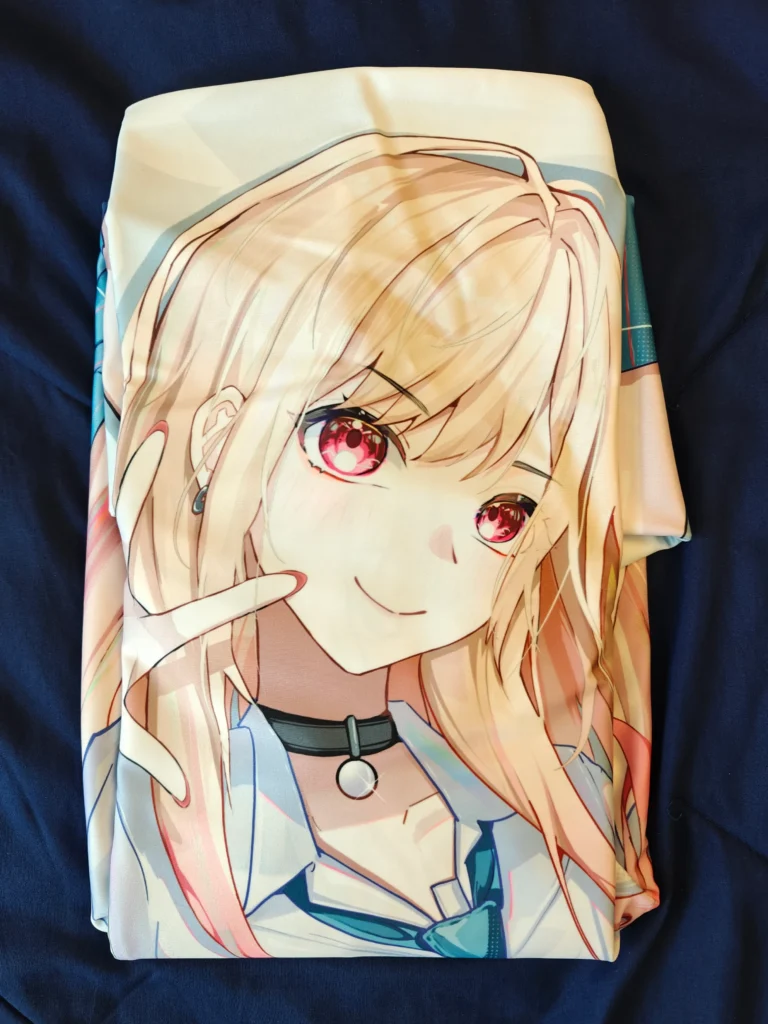
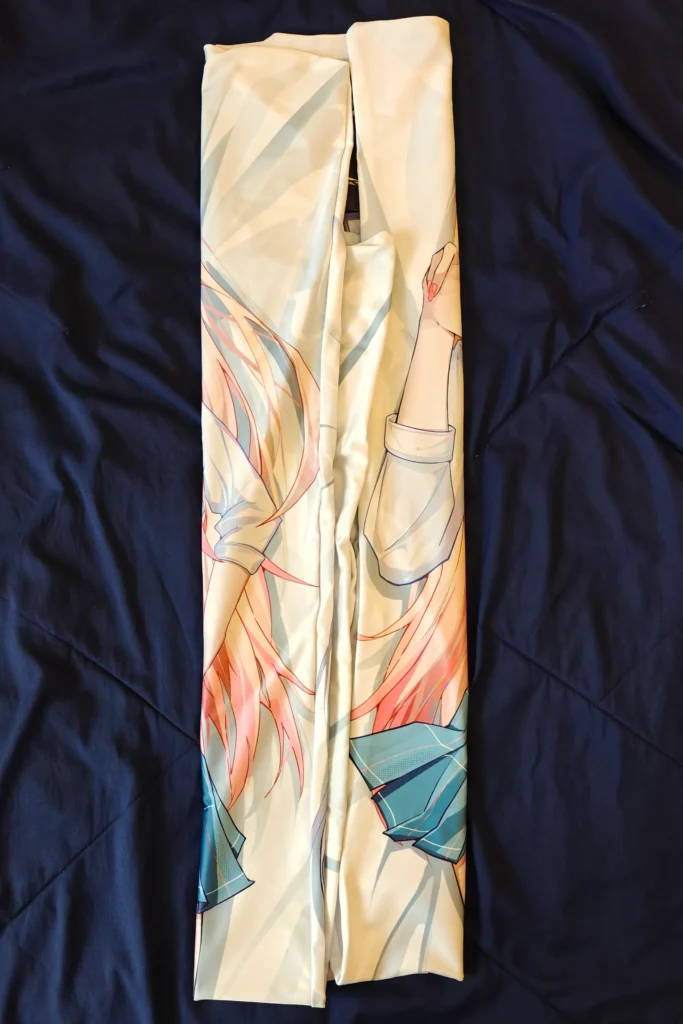
I took the opportunity to compare the two versions of the cover side-by-side, before and after removing the ecchi one from my pillow.
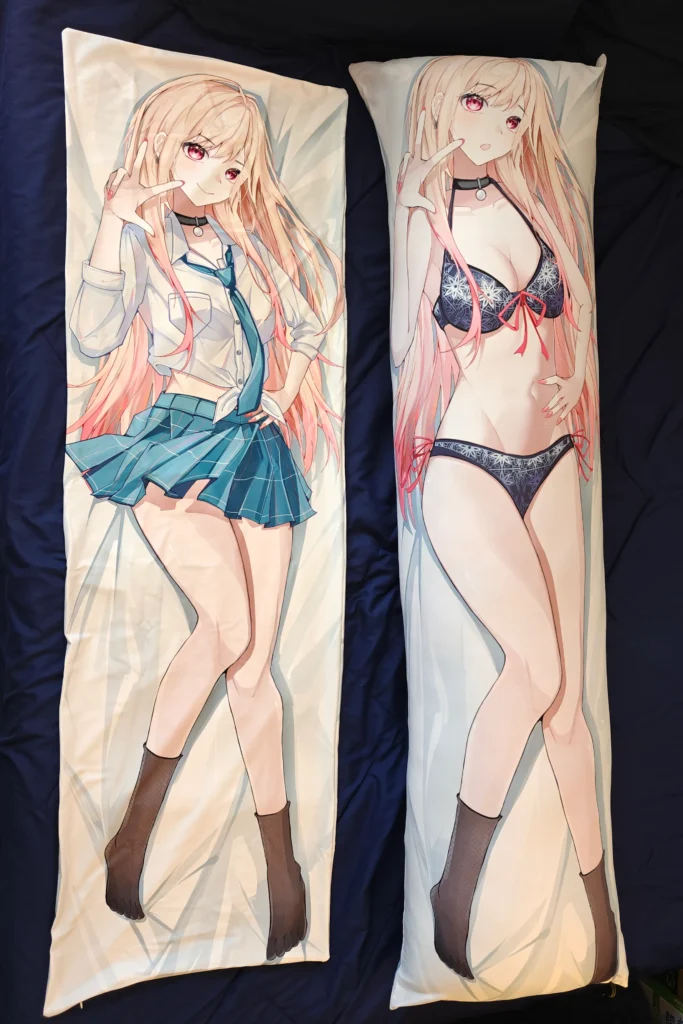
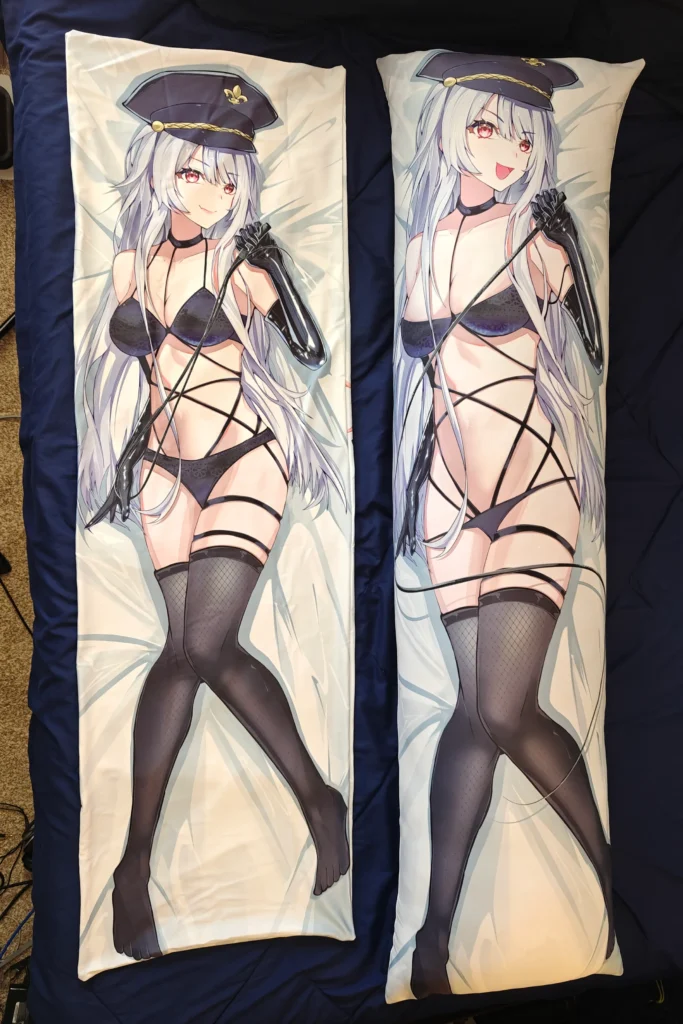
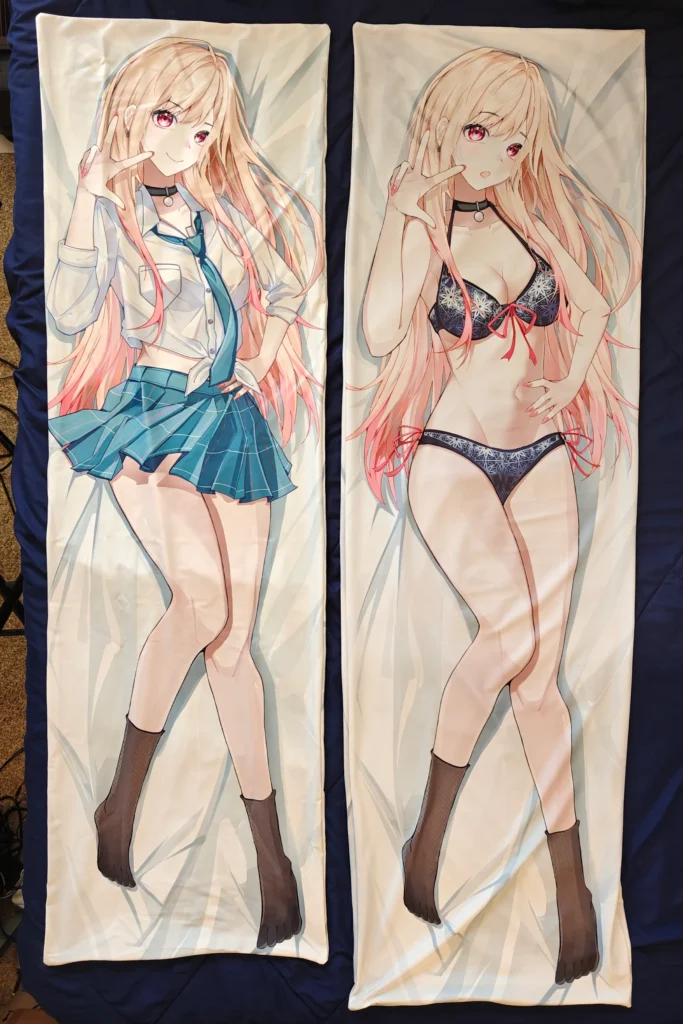
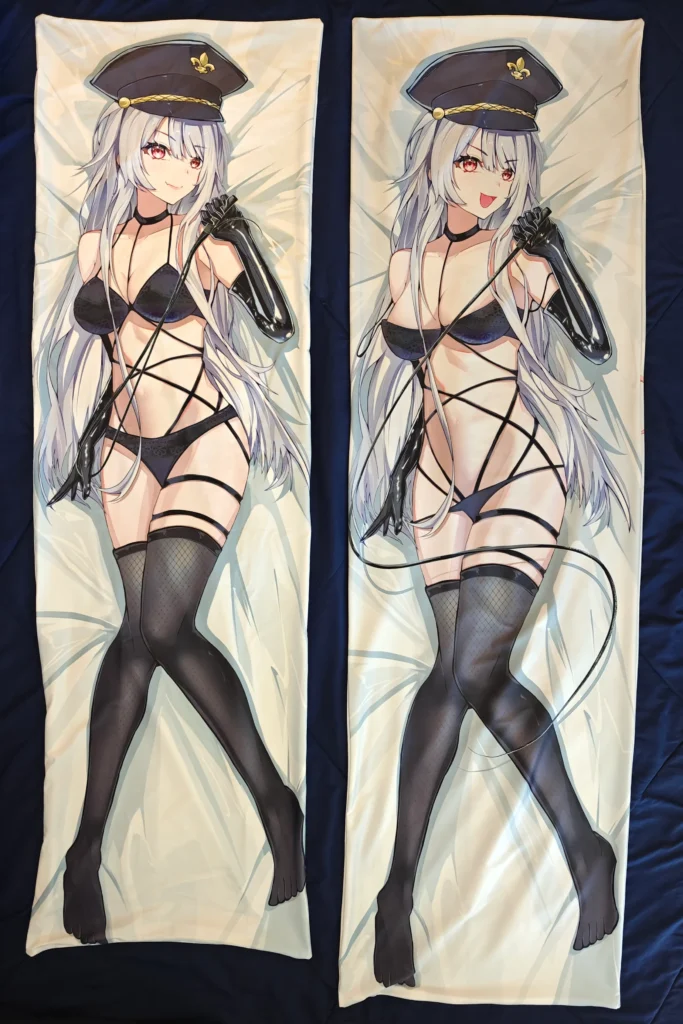
There are a couple of things to notice in the above comparisons. You can see that the new cover’s a bit shorter than the old one on my pillow. As I’ve covered in past blog posts and convention panels, dakimakura covers naturally end up stretching out over time once they’re put onto a pillow, so that in itself isn’t particularly unexpected.
With that said, you can also see that there’s less bleed area around Marin’s form on the kenzen cover than on the ecchi cover. On the back side of the kenzen cover, her feet appear to run off the edge of the cover (into the seam) in two different places! Examining them up close, they actually don’t, but the margin is far smaller than on the kenzen cover for some reason.
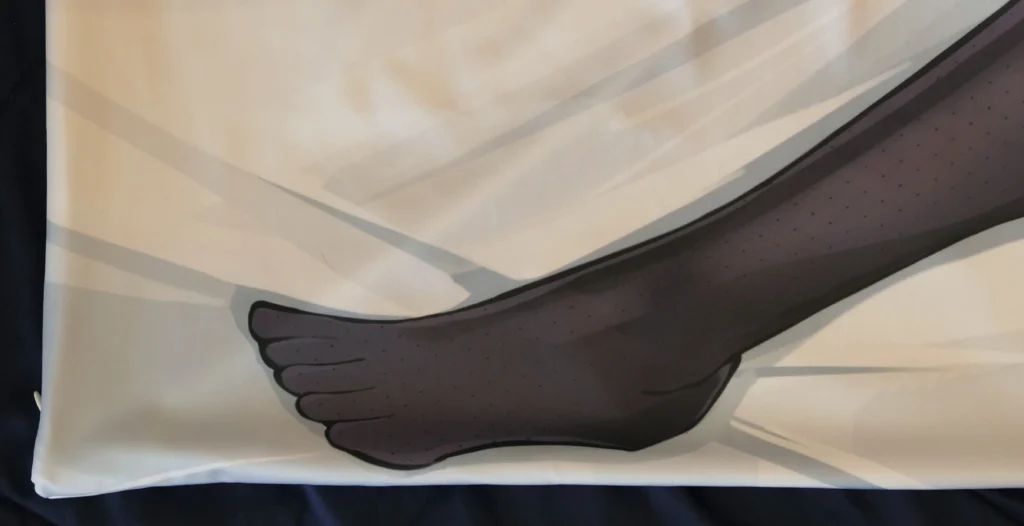
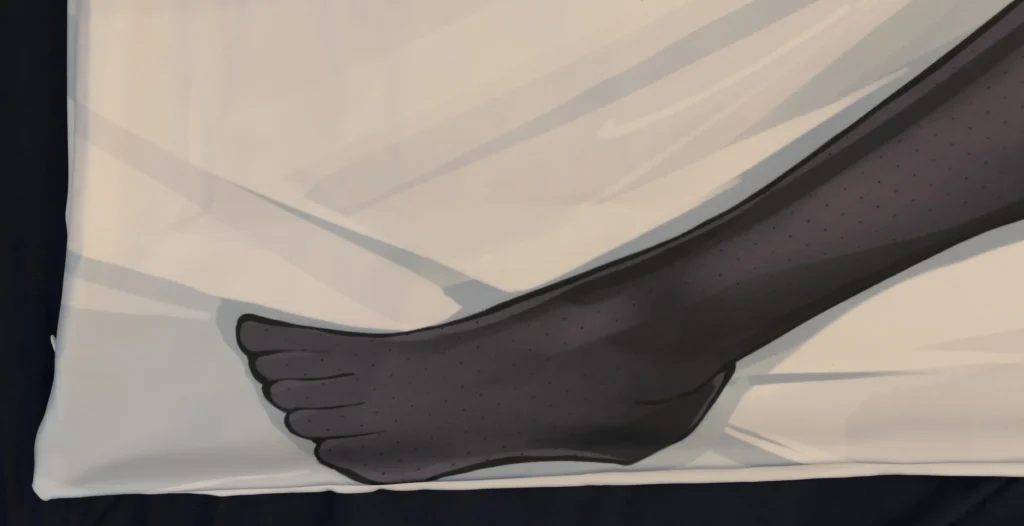
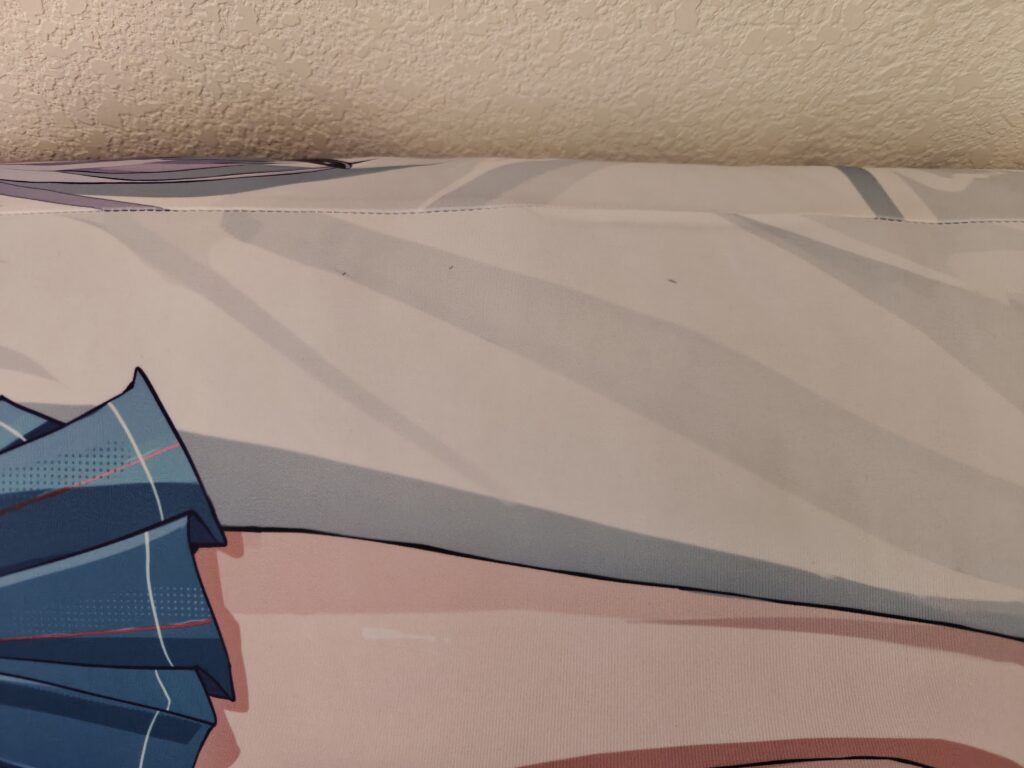
Finally, one other small quirk to note: both covers had a few dark specks printed onto the cover around Marin’s legs. They don’t show up in the low-resolution preview images on DakiKoi’s website. I suspect it’s some kind of anti-bootlegging fingerprint: if someone was to upscale the previews and print them elsewhere, they’d be missing these specks. However, given that they’re in slightly different locations on each version, it’s also possible I’m overthinking this and they’re just random artifacts from Casemaka’s printing equipement.
Communication
To make sure it’s clear my review’s unbiased, there’s one other thing I want to acknowledge with respect to DakiKoi that doesn’t strictly have to do with their products. Business-wise, if there is one weak point that’s prevented DakiKoi from having stronger growth so far (besides their use of the Casemaka printer), it’s probably the communication choices of their representatives, who sometimes come off a bit stilted.
In Hebe’s initial message to me, he made some very grandiose promises. Among them, he said DakiKoi “can even customize [your cover] to feature your favorite character or style, making it truly yours.” To me, this sounded like an offer to actually commission a custom design, but it turned out it just meant they’d let me choose one of the few designs they were already selling to the general public. He also said the free daki cover would include a “personal note from our team, to make the unboxing special”; but there was no “personal note” in either package, only the standard DakiKoi label and the Casemaka fabric info card. (Moreover, the initial message worded the offer of a free cover as if it wouldn’t have any strings attached, with writing a review being totally optional for me if I “enjoy it and feel inspired”; it later became clear this review was expected in return for the cover.)
I was honored to receive a free cover for review at all, and I did not feel entitled to receive a custom commission or a handwritten note! But over-promising and under-delivering made the experience less impressive. It was an unforced error for Hebe to mention those nonexistent extras in the first place.
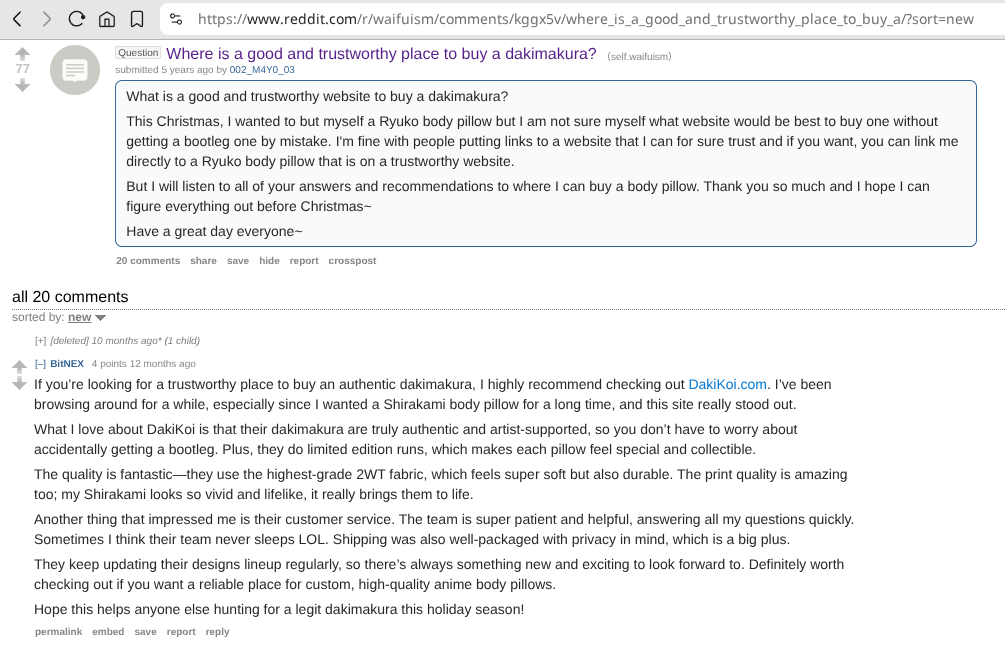
I also found when searching for other discussion of DakiKoi that there appears to be non-organic Reddit activity promoting them. For example, there was a post in /r/waifuism dated 19 December 2020 asking about trustworthy places to buy dakis. Years later, on 23 June 2025, an account by the name of /u/BitNEX left a glowing review of DakiKoi. It’s the first comment currently visible in that account’s history.
Since then, the account has mentioned DakiKoi in a majority of its comments, several dozen times total, sometimes in threads not even relating to daki designs or stores. (In one example, a Redditor in /r/Advice asked if they should bring their dakimakura to their college dorm, and /u/BitNEX answered with “Go for it! They’re good for your posture! You can get plain covers on Amazon. And you can get artist-supported, non-revealing covers from DakiKoi, by the way!”)
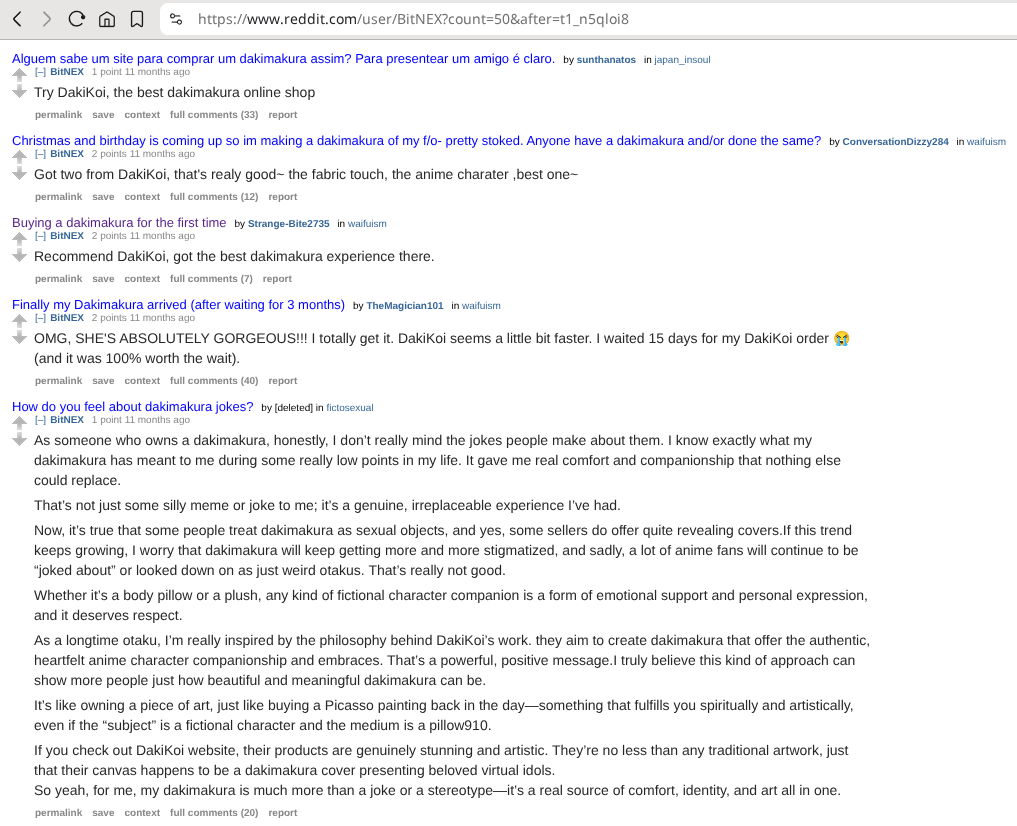
It’s always possible accounts like this are just genuine mega-fans of the business, but my gut tells me this kind of activity, once again, is non-organic. To be clear, DakiKoi would not be the only dakimakura group utilizing this kind of marketing. My own blog got a spam comment last year from a group called Furry Body Pillows, which is generally considered a legit circle; their plausible-deniability story was that they’d hired an outside marketing consultant firm, and that outside firm made the spam comment without Furry Body Pillows’ explicit permission.
Whatever the situation with these DakiKoi comments was, if someone’s wanting to learn more about a company and these are the kinds of results that come up when they search for it, it’s more likely to harm their reputation than to help. Hopefully, having some real discussion about their products such as my blog post will help DakiKoi feel less pressured to use guerrilla social media tactics.
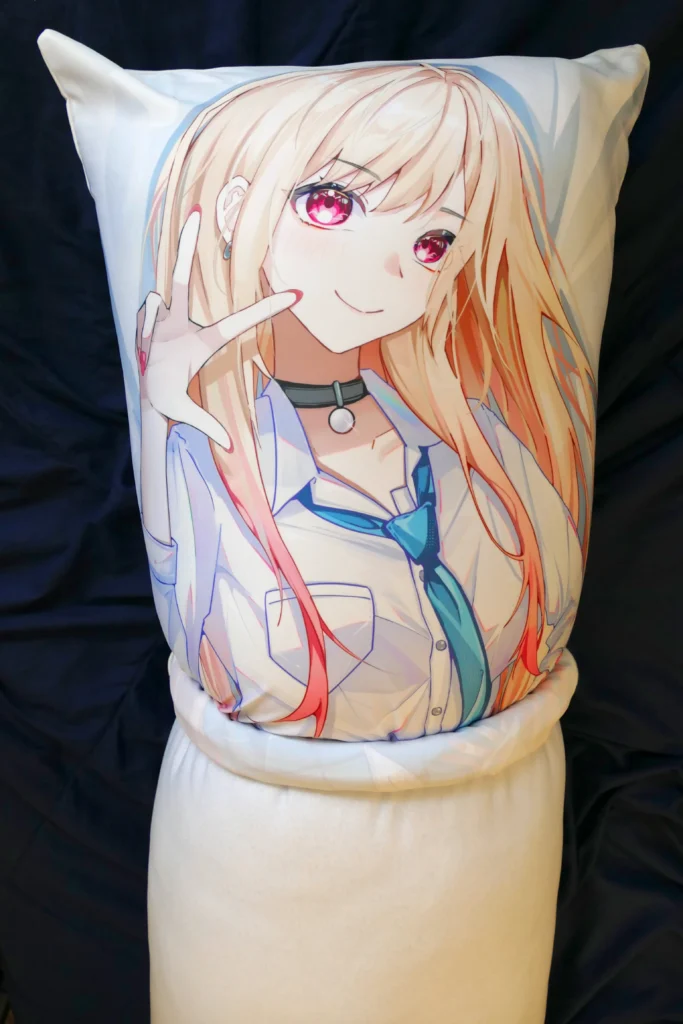
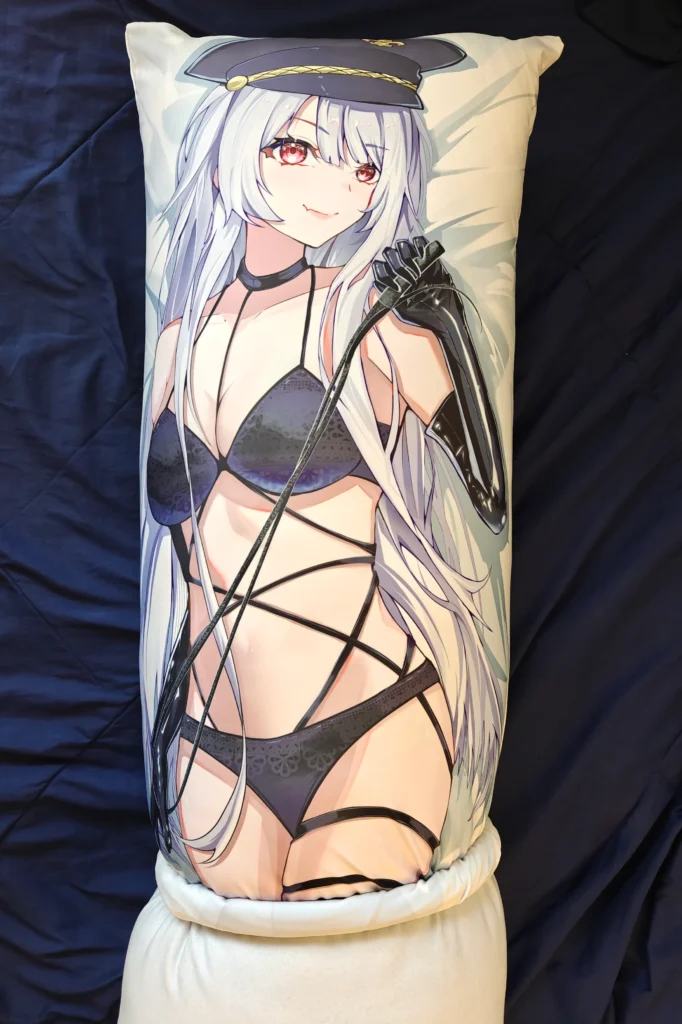
One other thing I find confusing about DakiKoi is that they claim not to be a print-on-demand shop, despite competing directly with other print-on-demand shops (such as Dakimakuri and Cuddly Octopus). DakiKoi’s website includes the words “limited edition” on every product page. I attempted to clarify this with Hebe, who was initially reluctant to answer technical questions about the business, but eventually gave me some insight after I explained my interest. It sounds like DakiKoi stocks a small handful of each design at any given time, re-ordering as needed. It also sounds like they generally plan to take designs down after they sell 99 units, or earlier if required by any relevant fan art guidelines (although none of their designs have reached the threshold for removal so far). Since there are no public sales numbers (or publicly-stated thresholds), it’s difficult to know how long you might have to purchase a design you want.
In short, I’d suggest the customer-facing parts of DakiKoi consider working on being more direct. That doesn’t mean they shouldn’t espouse the quality of their products, their passion, or anything else. On the contrary, they should worry less about buttering people up and talking in circles, and simply say what they want to say! Their designs and products should be doing most of the talking, anyway, given that they’re perfectly competent.
Conclusion
As I’ve generally indicated throughout this review, the DakiKoi cover met my expectations for a quality product. There are some quirks with the website, the art styles, and even the staff communication that remind me DakiKoi is a smaller “circle” compared to larger and more professional operations. But the covers themselves do the job well, and the slowly-growing design catalog offers a lot of appeal already. The Casemaka fabric provides a good balance between a nice feeling and durability; while it was once known as a bootleg fabric, I think it’s physically worthy of being used for legitimate products such as DakiKoi’s (although it’s not exceptional, and I would welcome any news about DakiKoi offering alternative printer options or switching printers altogether).
In Hebe’s original message to me, he mentioned he’d provide an “exclusive discount code” for my readers. It seemed like he might have forgotten about that, but when I inquired about it again, he provided the code NEW5OFF that you can use at checkout for a 5% discount. I want to be clear, I do not receive any commission when you use this code– it’s solely a 5% discount on the customer’s end, and potentially a way for DakiKoi to see purchases that I might’ve had a hand in sending their direction.
I’d be happy to answer any follow-up questions about the covers I received in the comments or my Discord server (or in the Dakimakuras Discord server, if you’d rather ping me there). DakiKoi staff are also present in both of those Discord servers to answer questions. Thanks again to Hebe and the rest of DakiKoi for allowing me to evaluate their offerings! I wish them luck, and will definitely check them out alongside the other websites I’m familiar with next time I’m looking to buy a cover for my collection.